
Departmental Plan 2026-2027
Copyright information
© His Majesty the King in Right of Canada, as represented by the Minister of of Transport, 2026
Catalogue No. TT2-8E-PDF
ISSN 2371-8633
At a glance
This departmental plan details the Canadian Transportation Agency’s priorities, plans, and associated costs for the upcoming three fiscal years.
These plans align with the priorities outlined in the Agency’s Vision, mission, raison d’être and operating context.
Some of the Agency’s current funds are temporary and sunset at the end of fiscal year 2025-26. When this plan was written, final decision on whether the temporary budget would be renewed had not yet been made. Although the financial forecast in this plan reflects this situation, the Agency decided to assume, for the purposes of planning 2026-27, that these funds would be renewed at the same level.
Key priorities
The Canadian Transportation Agency (the Agency) identified the following key priorities for 2026-27:
- Operational Excellence: Implement process optimization solutions to improve the delivery of Agency activities and services to Canadians.
- Improve accessibility in the transportation system: Leverage all of the Agency's tools to enhance accessibility within the transportation system.
- Enhance stakeholder engagement: Engage with participants of the transportation system to advance the Agency’s mandate and improve the efficiency of the transportation system.
- Cultivate a culture of continuous improvement: Continue to develop an organizational culture of continuous improvement, innovation, risk management, digital adaptability, and data-based decision-making, with an emphasis on personal accountability and ownership, to drive the best results for Canadians.
- Build a diverse and resilient organization: Create an organization that is diverse, inclusive, accessible, resilient, and that fosters a sense of belonging.
Comprehensive Expenditure Review
The government is committed to restraining the growth of day-to-day operational spending to make investments that will grow the economy and benefit Canadians.
The Agency does not have planned reductions under the Comprehensive Expenditure Review.
They Agency will, however, respect the spirit of the exercise by doing the following:
- Continually reviewing and streamlining its business practices and procedures, while also adopting new technologies and tools to enhance process and cost efficiency.
This departmental plan reflects these measures.
Highlights for the Canadian Transportation Agency in 2026-27
Looking ahead to the 2026-27 fiscal year, the Agency will advance a focused set of initiatives to strengthen its delivery of fair, efficient, and accessible transportation services to Canadians. These initiatives will directly support the Agency’s key priorities, identified above. Specific activities the Agency would like to highlight include:
- Advancing work to modernize rail economic regulatory tools related to key rate-setting and forecasting methods;
- Pursuing the work to amend the air passenger protection regulations and implement cost recovery for air passenger complaints;
- Advancing accessible transportation issues internationally and through training initiatives;
- Continuing to enhance complaint processing efficiency, including through the use of Artificial Intelligence; and,
- Continuing to foster an inclusive, equitable, and collegial workforce environment that supports employee satisfaction and well-being.
In 2026-27, total planned spending (including internal services) for the Agency is $35,702,168 and total planned full-time equivalent staff (including internal services) is 258.
Summary of planned results
The following provides a summary of the results the department plans to achieve in 2026-27 under its main areas of activity, called “core responsibilities.”
Core responsibility 1: Independent regulatory and dispute-resolution services for transportation providers and users
Departmental results:
- Departmental Result 1: An efficient, competitive national transportation system
- 1A: Percentage of regulatory authorities issued and determination cases resolved within service standards
- 1B: Percentage of rail and marine disputes resolved within service standards
- Departmental Result 2: Consumers have access to justice and protection for air travel.
- 2A: Number of air travel consumer complaints received per 100 flights
- 2B: Percentage of air consumer protection disputes resolved within service standards
- 2C: Average wait time for air consumer protection disputes (days)
- Departmental Result 3: Persons with disabilities have access to justice and accessible transportation services
- 3A: Number of air travel accessibility complaints received per 100 flights
- 3B: Percentage of accessibility disputes resolved within service standards
For the 2026-27 fiscal year, the Agency is committed to advancing priorities in our three key areas of responsibility: supporting an efficient national transportation system, providing consumer protection for air passengers, and protecting the human right of persons with disabilities to an accessible transportation system.
With respect to the Agency’s responsibility to support an efficient national transportation system, monitoring rail system performance will remain a priority, as the resulting insights will facilitate cooperation among stakeholders, support effective planning, and contribute to recovery from future system disruptions. The Agency completed consultations on the Railway Interswitching Regulations in 2025-26 and launched consultations on what market factors should be considered in its annual determination of regulated interswitching rates, which are expected to conclude in 2026–27. The Agency also completed consultations on forecasting methods for the Maximum Revenue Entitlement program. These methodologies will be updated and finalized as required including potential updates to indices related to historical labour and fuel prices.
On December 31, 2025, the Federal Court of Appeal dismissed appeals filed by Canadian National Railway concerning the methodology the Agency uses to determine the Volume-Related Composite Price Index, and in particular, how the Agency accounts for forecast variances. The court confirmed that forecasting variances are an inherent feature of the methodology and that the Agency had properly exercised its discretion in this regard. As a result, the Agency will continue using its established methodology, while also looking for opportunities to further enhance the effectiveness of its forecasting models based on feedback it has received in recent consultations on this question.
With respect to providing consumer protection for air passengers, the Agency will continue to advance work stemming from the 2023 amendments to the Canada Transportation Act. This includes continuing to mature the Air Travel Complaints Resolution Office (ATCRO), established on September 30, 2023, and seeking to ensure the financial stability of the program. In 2026–27, the ATCRO aims to increase further its complaint capacity by refining processes, implementing more AI-enabled tools and introducing new passenger tools to assess complaint eligibility before submission. Finally, the Agency will continue to work on proposed amendments to the Air Passenger Protection Regulations and cost recovery for eligible air travel complaints.
As it relates to accessibility, the Agency has laid the groundwork for several important initiatives which it will pursue over the coming year, the focus of which will be international collaboration and training support. The Agency will support the development of a comprehensive accessibility strategy for international aviation by International Civil Aviation Organization.
Planned spending: $26,379,787
Planned human resources: 198
More information about independent regulatory and dispute-resolution services for transportation providers and users can be found in the full plan.
For complete information on the Agency’s total planned spending and human resources, read the Planned spending and human resources section of the full plan.
Message from the Chair and Chief Executive Officer
Last year marked a period of continued improvement for the Canadian Transportation Agency (the Agency) as it fulfilled its dual role as regulator and tribunal in service to Canadians. In the year ahead, the Agency will continue to pursue operational efficiencies and invest in a high-performing, skilled workforce, while building on the progress already underway. The Agency remains firmly committed to advancing its three core mandate areas: supporting an efficient national transportation system, providing consumer protection for air passengers, and protecting the right of persons with disabilities to accessible transportation.
In support of an efficient national transportation system, and across all transportation modes within its jurisdiction, the Agency will continue to deliver timely, expert regulatory determinations and dispute resolution services. Consistent with the Government of Canada’s efforts to reduce red tape and regulatory burden, the Agency will review its process for approving railway line construction so that it is better aligned with the complexity, risks, and impacts of proposed projects. The objective is to ensure that resources and efforts from railway companies, communities, indigenous groups and the Agency itself are used more efficiently.

France Pégeot
Chair and CEO of the Canadian Transportation Agency
The Agency will continue to hold regular meetings with railway stakeholders to provide a forum to discuss supply chain conditions, commodity movement, operational challenges, and shippers’ concerns. By facilitating productive dialogues between shippers and railways, potential solutions to improve system performance can be identified and ensures the Agency maintains a balanced view of the rail transportation system from both railway and shipper perspectives.
The Agency expects to continue receiving a high volume of air passenger complaints in the coming fiscal year—exceeding 40,000, consistent with trends over the past four years. While the Air Travel Complaints Resolution Office (ATCRO), established in 2023, has already delivered significant productivity gains—including closing approximately three times as many complaints in its first full year as were closed in the final year of the previous model—the Agency will continue exploring further improvements. This includes developing and implementing artificial intelligence (AI)-enabled tools and leveraging data science and automated tools to actively manage queued complaints. Together, these measures are intended to increase consistency, throughput, and decision quality, with the objective of achieving a complaint closure rate that meets or exceeds incoming volumes.
In recent years, the Agency has taken meaningful steps to advance transportation accessibility. A priority has been to reduce damages to mobility aids in air transportation. Through close collaboration with transportation service providers and persons with disabilities, and while it is recognized that more has to be done, concrete improvements have been achieved. As a result, there has been a reduction in the number of complaints related to this issue, in particular egregious incidents. Looking ahead, the Agency will explore additional opportunities to enhance the airport journey for persons with disabilities, from curbside arrival through boarding, by working with the various partners to identify and remove barriers.
The Agency will also strengthen its focus on ensuring that transportation service providers equip their staff with the training necessary to meet the needs of persons with disabilities. More broadly, the Agency will continue to engage with disability communities and transportation service providers to conduct collaborative research; develop guidance, tools, and training; and collect data. The Agency will also continue working with domestic and international partners to advance a comprehensive accessibility framework for international aviation through the International Civil Aviation Organization (ICAO), recognizing the importance of global consistency in accessible transportation.
My term as Chair and CEO of the Agency concludes in the coming fiscal year. Over the past five years, the organization has undergone a period of renewal and transformation, and I am proud of the progress achieved. While the Agency will continue to face new challenges as Canada’s transportation system evolves and grows in complexity, I am confident that the Agency is well positioned to meet these challenges. The expertise and commitment to excellence of its employees and appointed members will enable it to respond effectively to emerging issues.
I remain deeply grateful for their professionalism and dedication of the Agency. I am confident that my successor will be well supported and that Canadians will continue to receive high-quality services contributing to an efficient, fair and accessible transportation systems contributing to both the economic and social development of Canada.
France Pégeot
Chair and CEO of the Canadian Transportation Agency
Plans to deliver on core responsibilities and internal services
Core responsibilities and internal services
Core responsibility 1: Independent regulatory and dispute-resolution services for transportation providers and users
In this section
Description
Set and enforce economic, accessibility, and air passenger protection rules for the national transportation system; resolve disputes between transportation service providers and users through facilitation, mediation, arbitration, and adjudication; and provide information to stakeholders and Canadians in general on the transportation system and their transportation-related rights and responsibilities.
Quality of life impacts
Domain: Prosperity
Indicator: GDP per capita
Domain: Society
Indicator: Accessible environments
Domain: Good Governance
Indicator: Confidence in institutions
Indicators, results and targets
This section presents details on the department’s indicators, the actual results from the three most recently reported fiscal years, the targets and target dates for independent regulatory and dispute-resolution services for transportation providers and users. Details are presented by departmental result.
Table 1: An efficient, competitive national transportation system
Table 1 provides a summary of the target and actual results for each indicator associated with the results under independent regulatory and dispute-resolution services for transportation providers and users.
| Departmental Result Indicators | Actual results | 2026‑27 target | Date to achieve target |
|---|---|---|---|
| Percentage of regulatory authorities issued and determination cases resolved within service standards |
|
85% | March 2027 |
| Percentage of rail and marine disputes resolved within service standards |
|
80% | March 2027 |
Table 2: Consumers have access to justice and protection for air travel
Table 2 provides a summary of the target and actual results for each indicator associated with the results under independent regulatory and dispute-resolution services for transportation providers and users.
| Departmental result indicators | Actual results | 2026‑27 target | Date to achieve target |
|---|---|---|---|
| Number of air travel consumer complaints per 100 flights |
|
4.3 | March 2029 |
| Percentage of air consumer protection disputes resolved within service standards |
|
100% | March 2027 |
| Average wait time for air consumer protection disputes (days) |
|
30 | March 2027 |
Table 3: Persons with disabilities have access to justice and accessible transportation services
Table 3 provides a summary of the target and actual results for each indicator associated with the results under independent regulatory and dispute-resolution services for transportation providers and users.
| Departmental result indicators | Actual results | 2026‑27 target | Date to achieve target |
|---|---|---|---|
| Number of air travel accessibility complaints per 100 flights |
|
0.04 | March 2029 |
| Percentage of accessibility disputes resolved within service standards |
|
80% | March 2027 |
Additional information on the detailed results and performance information for the Agency’s program inventory is available on GC InfoBase.
Plans to achieve results
The following section describes the planned results for independent regulatory and dispute-resolution services for transportation providers and users in 2026-27.
An efficient, competitive national transportation system
One of the Agency’s key roles is to help ensure that the national transportation system runs efficiently and smoothly in the interests of all Canadians – those who work and invest in it, the producers, shippers, travellers and businesses who rely on it, and the communities where it operates. In so doing, the Agency is guided by the National Transportation Policy, which is part of the Canada Transportation Act (the Act) and affirms that competition and market forces are the primary drivers in providing viable and effective transportation services.
Results we plan to achieve:
- Renewed focus on monitoring, enforcement, and timeliness: Consistent with the Government of Canada’s efforts to reduce red tape and regulatory burden, the Agency will update its processes so that they are better aligned with the complexity, risks, and impacts. The objective is to ensure that resources and efforts from all stakeholders and the Agency itself are used more efficiently. This includes in particular applications for railway construction.
- Railway interswitching consultations (market factors): Following its consultations on the Railway Interswitching Regulations in 2025-26, the Agency determined that no regulatory changes were required. In response to direction from the Federal Court of Appeal about considering commercial market factors in regulated rate settings, the Agency launched a consultation on this topic specifically related to regulated interswitching rate determinations. This consultation is expected to conclude early in Q1 2026-27.
- Railway consultations (price analyses): The Agency will initiate consultations on the models used for historical indices related to labour and fuel price analyses to support its regulatory framework.
- Railway consultations report (price index): In 2025, the Agency consulted industry stakeholders on the effectiveness of forecasting models used in determining the Volume-Related Composite Price Index (an inflation index that reflects forecasted price changes of railway costs for labour, fuel, material, cost of capital and depreciation). In 2026, the Agency will report on the submissions it received and finalize a revised forecast methodology for the upcoming three years.
- Lac Mégantic Bypass decision: The Agency expects to finish assessing, and issue a determination on, the Canadian Pacific Railway Company’s application to construct the Lac-Mégantic Bypass railway line. This follows a public comment period the Agency launched in November 2025.
- New railway construction application process and updated guide: The Agency will implement a new approval process for railway construction applications. Projects will assessed based on their complexity and impact and will to help applicants, localities, and the Agency allocate time and resources appropriately for each project. In supporting activities, the Agency will publish a revised Guide on How to Apply for Approval to Construct a Railway Line.
- New Indigenous consultation guide: The Agency will publish its Indigenous Consultation and Engagement Guide for railway line construction approvals, which has been informed by consultations with Indigenous groups and railway companies.
Consumers have access to justice and protection for air travel
The Agency will continue to work on the Air Passenger Protection Regulations (APPR) amendments, on cost recovery for eligible air travel complaints and on increasing the efficiency of the ATCRO.
The funds which support primarily the Agency’s air passenger protection program are temporary and sunset at the end of fiscal year 2025-26. When this plan was written, final decision on whether the temporary budget would be renewed had not yet been made. Although the financial forecast in this plan reflects this situation, the Agency decided to assume, for the purposes of planning 2026-27, that these funds would be renewed at the same level.
Results we plan to achieve:
- Air Passenger Protection Regulations (APPR): The Agency will continue to work on proposed amendments to the APPR.
- Air Travel Complaints Resolution Office (ATCRO): The Agency will continue work to increase its complaint closure capacity, which is expected to exceed 40,000 in the coming fiscal year. Building on lessons learned since the launch of the ATCRO on September 30, 2023, the Agency is planning the implementation of some significant enhancements, including: ongoing streamlining and optimization of processes and procedures, the implementation of AI-enabled tools to support decision makers increasing both overall output and the quality and consistency of decisions, and launching passenger-focused tools to help travellers assess the eligibility and merit of a complaint prior to submission. These efforts will support the ongoing maturation of the ATCRO model and the continued effectiveness and efficiency of the air travel complaints resolution process, including the objective of closing 45,000 complaints next year.
- Cost Recovery: The Agency will work on cost recovery, taking into consideration the input and feedback received in its Fall 2024 consultation.
Persons with disabilities have access to justice and accessible transportation services
The Agency contributes to improving the accessibility of the federal transportation system for persons with disabilities. This includes resolving disputes, developing and enforcing regulations and working with people with disabilities and industry on various projects and initiatives of common interest.
Results we plan to achieve:
- Training initiatives: Following the pilot project launched in 2025 with representatives from the community of persons with disabilities and industry, the Agency will continue implementation of its “Train the Trainers” initiative. This project facilitates a model for training staff from small transportation service providers, who can then serve as in-house accessibility trainers for their organizations.
- International projects: Achieving consistent, cohesive, and connected services for persons with disabilities, and in particular for air travel, requires a comprehensive and inclusive approach. The Agency will continue to contribute its expertise and leadership on the ICAO working group mandated to develop projects on accessibility in international aviation. In particular, a key focus in 2026-27 will be the continued support for an ICAO long-term accessibility strategy.
- Mobility aid research project: The Canadian Mobility Aid Working Group, established by the Agency, advances voluntary initiatives that improve the safe and efficient carriage of mobility aids. In 2026-27, in addition to ongoing activities, the group will support research being undertaken by the University Health Network (UHN), affiliated with the University of Toronto, regarding the development of technical guidelines for the safe storage of mobility aids during air transportation. This work is a four-year project funded by Accessibility Standards Canada and led by a team of UHN scientists and engineers.
- Mobility aid job aid: The Agency will support development of a practical job aid for the safe handling and transportation of mobility aids by ground handlers, check-in agents and other airline personnel, in collaboration with Transport Canada and the National Research Council Canada. The job aid will be published on the Agency’s website, and training videos on how to use it will be produced.
Gender-based Analysis Plus
Summary
In line with the Canadian Gender Budgeting Act, the Agency will keep applying gender-based analysis plus (GBA+) to assess gender and diversity impacts in programs and internal services. For 2026–27, GBA+ will be integrated into program design, policy development, and decision-making, with a focus on inclusive outcomes.
Measuring Impacts
The Agency plans to measure impacts by:
- Aligning program indicators with the Gender Results Framework and Quality of Life Framework, focusing on representation and accessibility;
- Continuing to track employment equity and diversity metrics through existing Human Resources systems; and,
- Using available program data to identify any differential, and where gaps exist, planning improvement through the Agency’s data strategy.
Data Collection
Currently, the Agency collects data related to employment equity and diversity on an ongoing basis. Where gaps exist, the Agency will:
- Enhance its data strategy to include intersectional analysis; and,
- Collaborate with central agencies and other departments to adopt best practices for GBA+ data collection.
Governance and Capacity
While the Agency does not have dedicated full-time GBA+ resources, internal expertise is leveraged for Treasury Board submissions, Memoranda to Cabinet, and workforce planning. GBA+ principles are embedded in governance processes.
Planned resources to achieve results
Table 4: Planned resources to achieve results for independent regulatory and dispute-resolution services for transportation providers and users
Table 4 provides a summary of the planned spending and full-time equivalents required to achieve results.
| Resource | Planned |
|---|---|
| Spending | $26,379,787 |
| Full-time equivalents | 198 |
Complete financial and human resources information for the Agency’s program inventory is available on GC InfoBase.
Program inventory
Independent regulatory and dispute-resolution services for transportation providers and users is supported by the following programs:
- Dispute Resolution
- Determinations and Compliance
Additional information related to the program inventory for independent regulatory and dispute-resolution services for transportation providers and users is available on the Results page on GC InfoBase.
Summary of changes to reporting framework since last year
Since last year’s Departmental Plan, the Agency has updated its Departmental Results Framework (DRF) and made the following amendments which apply for 2026-27:
- The Transportation Fluidity Index indicator was removed from the Agency’s Departmental Results Framework as it was too broad and extended beyond the scope of the Agency’s core responsibilities. The indicator was overly complex and required data that either does not exist or that the Agency cannot access;
- To improve clarity and specificity, the title of the dispute resolution indicator in the DRF was revised to explicitly reference “rail and marine” disputes. This adjustment ensures the indicator accurately reflects the types of complaints covered, aligning with the Agency’s services in air passenger, accessibility, rail, and marine dispute resolution; and
- A new indicator measuring the average wait time for air consumer protection disputes (in days) was introduced in the DRF. This addition aims to increase transparency about the timelines for the full lifecycle of a complaint.
Internal services
In this section
Description
Internal services are the services that are provided within a department so that it can meet its corporate obligations and deliver its programs. There are 10 categories of internal services:
- acquisition management services
- communications services
- financial management services
- human resources management services
- information management services
- information technology services
- legal services
- material management services
- management and oversight services
- real property management services
Plans to achieve results
This section presents details the department’s plans to achieve results and meet targets for internal services.
Enhancing data management, analytics and cybersecurity: Building on recent progress in AI, the Agency will focus on integrating AI solutions into business processes to improve decision-making and operational efficiency. In parallel, as cybersecurity remains a top priority, the Agency will deepen collaboration with Shared Services Canada and work with the Canadian Centre for Cyber Security to conduct advanced security testing. These efforts aim to safeguard systems, mitigate cyber risks, and deliver secure, reliable digital services to Canadians.
Financial sustainability: Budget 2023 announced that the Agency would receive $75.9 million over three years, starting in 2023-2024, in order to increase its capacity to process air travel complaints. The temporary funding came to an end in fiscal year 2025-2026. The Agency is pursuing funding options to ensure the delivery of its mandate in an effective and timely manner.
Building a modern, diverse work force: The Agency’s work to provide its employees with a safe, inclusive, and resilient workplace will continue. The Agency will expand mental health and wellness programs, strengthen accessibility initiatives, and act on Public Service Employee Survey feedback to improve psychological safety and career development. In addition, leadership development, enhanced onboarding, and mentoring will support succession planning and promote bilingualism. Workforce planning will use data analytics to address talent gaps and create learning paths, including digital skills and knowledge transfer.
Emergency preparedness: The Agency will strengthen its emergency preparedness through updated continuity planning and drills. These initiatives reflect government-wide priorities for inclusion, accountability, and modernization, and our commitment to fostering learning, resilience, and operational excellence.
Inclusive communications: To ensure that information is inclusive and accessible to Canadians, the Agency will engage with users to continuously improve web services.
Planned resources to achieve results
Table 5: Planned resources to achieve results for internal services this year
Table 5 provides a summary of the planned spending and full-time equivalents required to achieve results.
| Resource | Planned |
|---|---|
| Spending | $9,322,381 |
| Full-time equivalents | 60 |
Complete financial and human resources information's program inventory is available on GC InfoBase.
Planning for contracts awarded to Indigenous businesses
For the 2024-25 fiscal year, the Agency’s result exceeded both the 5% target and the amount forecasted in its Departmental Plan for 2025-26. The Agency achieved this outcome through various means, which continue to be used. They include, but are not limited to:
- Ensuring that contracting and procurement activities are systematically integrated into the Agency’s business planning and financial forecasting processes, with consistent consideration given to the Indigenous procurement target across all planned initiatives;
- Reinforcing with business owners the importance of considering Indigenous suppliers in procurement decisions by increasing Indigenous business participation through Public Services and Procurement Canada’s (PSPC) procurement tools and the Indigenous Business Directory, and by including at least one pre‑qualified Indigenous business in the targeted commodity for all competitive contracts;
- Monitoring the proportion of contracts awarded and applying additional corrective measures such as conditional and voluntary set-asides should performance fall short of the Agency's targeted 5% threshold; and
- Ensuring that all procurement officers have successfully completed the mandatory training on Indigenous procurement considerations.
Table 6: Percentage of contracts planned and awarded to Indigenous businesses
Table 6 presents the current, actual results with forecasted and planned results for the total percentage of contracts the department awarded to Indigenous businesses.
| 5% Reporting field | 2024‑25 Actual result | 2025‑26 Forecasted result | 2026‑27 Planned result |
|---|---|---|---|
| Total percentage of contracts with Indigenous businesses | 8.58% | 5% | 5% |
Department-wide considerations
In this section
Related government priorities
United Nations 2030 Agenda for Sustainable Development and the UN Sustainable Development Goals
As part of its ongoing commitment to sustainable development, the Agency is dedicated to contributing to the Government of Canada’s sustainable development goals and targets. The Agency’s efforts are described in its 2023-27 Departmental Sustainable Development Strategy (DSDS), which directly supports three key goals of the 2022-2026 Federal Sustainable Development Strategy (FSDS):
- Goal 10: Reconciliation and Inequality Reduction – The Agency focuses on advancing reconciliation with Indigenous Peoples and taking action to reduce inequality.
- Goal 12: Sustainable Transportation and Waste Reduction – The Agency aims to reduce waste and transition to zero-emission vehicles.
- Goal 13: Climate Change Action – The Agency is committed to taking action on climate change and addressing its impacts.
In alignment with the United Nations Decade of Action, the Agency strives to integrate these goals across its strategic policies and activities, mobilizing all sectors of society to develop sustainable solutions to global challenges and achieve the Sustainable Development Goals (SDGs) by 2030.
More information on the Agency’s contributions to Canada’s Federal Implementation Plan on the 2030 Agenda and the Federal Sustainable Development Strategy can be found in our Departmental Sustainable Development Strategy.
Artificial Intelligence
Since the 2025-26 fiscal year, the Agency has strengthened its interdepartmental relationships to share knowledge and best practices in Artificial Intelligence (AI), fostering collaboration and accelerating innovation across the organization. The Agency has introduced an AI governance framework, ensuring responsible and transparent use of AI technologies, and successfully implemented a Protected B environment for AI to enable secure experimentation and deployment of solutions and tools. Initial steps have been taken toward leveraging AI for operational improvements, in particular, to address Complaint Resolution Office challenges. This sets the stage for future efficiencies, and in 2026-27, the Agency will build on this foundation by integrating AI solutions into business processes to improve decision-making and operations.
Key risks
Financial resilience: Given the unpredictability of workload (e.g. number of complaints) and as a result of on-going budgetary pressures and a high proportion of the Agency’s budget being temporary, there is a risk that sufficient funding sources may not be available to deliver on a timely manner activities and services. To mitigate this risk, the Agency continually reviews and streamlines its business processes and procedures, while also adopting new technologies and tools to enhance efficiency.
Change management: The Agency is managing change driven by legal and policy shifts, coupled with the rapid emergence of transformative technologies. This dynamic environment challenges the Agency’s ability to adapt its processes, systems, and workforce. To mitigate the risks associated with the high rate of change and maintain agility, the Agency is reassessing its investment plans for technology and systems, as well as its strategies for employee development and training, with a view to further investing in and strengthening these areas. Additionally, the Agency is optimizing stakeholder engagement and external communications products.
Maintaining expertise: Sustaining a sufficient level of specialized technical professionals across critical transportation domains and accessibility may pose future challenges to the Agency’s ability to deliver on some of its key areas of responsibility. To mitigate these risks, the Agency is developing a reliable talent pipeline, promoting knowledge sharing and development, and proactively planning for future workforce needs. At the same time, structured knowledge transfer and cross-training reduce reliance on individual employees, while strategic workforce planning helps anticipate skill gaps early so staffing risks can be addressed before they become critical.
Digital and technology: The Agency continues to manage several technology-related risks. Going into 2026-27, cybersecurity remains a priority, with challenges in retaining specialized resources and adapting to evolving threats. To mitigate these risks, the Agency is building partnerships and investing in modern, automated security solutions to strengthen resilience. Budget constraints and shifts in government policy may influence procurement processes and lead to delays; the Agency will focus on strengthening change management with Shared Services Canada to maintain continuity. The Agency is also addressing end-of-life technologies, such as unsupported website and intranet technologies, by prioritizing modernization and onboarding Canada.ca. Rapid AI adoption and data governance requirements are introducing privacy and compliance complexities, which are, and will be, managed through policy development, mandatory training, and process reviews. Finally, enterprise software delivery faces capacity challenges and varying readiness across business units. The Agency will continue to use its Digital Strategy to better align priorities and resources.
Planned spending and human resources
This section provides an overview of the Agency’s planned spending and human resources for the next three fiscal years and of planned spending for 2026-27 with actual spending from previous years.
Spending
This section presents an overview of the department's planned expenditures from 2023-24 to 2028-29.
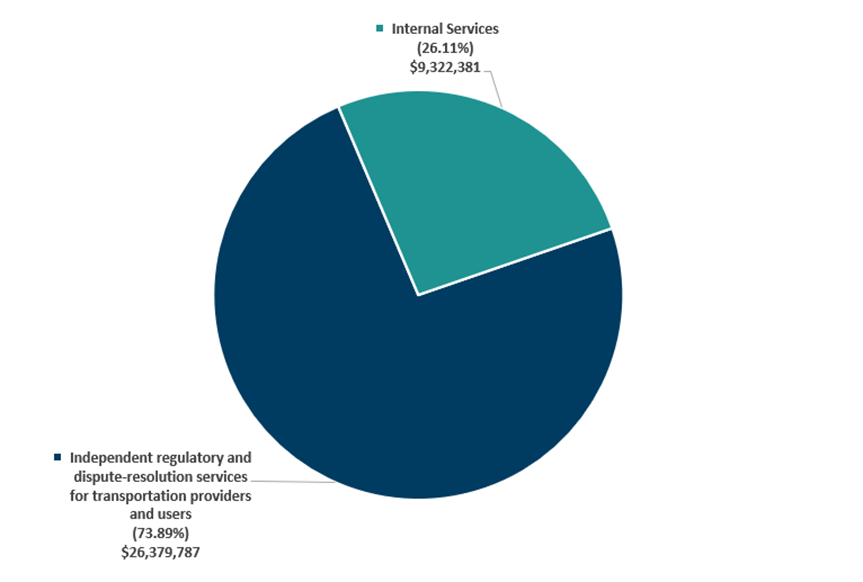
Graph 1 presents the department’s planned spending in 2026-27 by core responsibility and for internal services.
Text description of Graph 1
The graph depicts a pie chart divided into two as follows:
- Internal services: $9,322,381 or 26.11%.
- Independent regulatory and dispute-resolution services for transportation providers and users: $26,379,787 or 73.89%
| Core responsibilities and internal services | 2026‑27 planned spending |
|---|---|
| Independent regulatory and dispute‑resolution services for transportation providers and users | $26,379,787 |
| Internal services | $9,322,381 |
Analysis of planned spending by core responsibility
For fiscal year 2026-27, planned spending for the core responsibility and internal services is projected to decline by approximately $23.9 million. This reduction is due to the sunsetting of temporary funds to expand the Agency’s capacity to process air passengers complaints, as outlined in Budget 2023 (i.e., $75.9 million over three years, beginning in 2023-24).
Budgetary performance summary
Table 7 Three-year spending summary for core responsibilities and internal services (dollars)
Table 7 presents the Agency’s spending over the past three years to carry out its core responsibilities and for internal services. Amounts for the 2025–26 fiscal year are forecasted based on spending to date.
| Core responsibilities and internal services | 2023‑2024 Actual expenditures | 2024‑2025 Actual expenditures | 2025‑2026 Forecast spending |
|---|---|---|---|
| Independent regulatory and dispute‑resolution services for transportation providers and users | $37,734,022 | $44,118,074 | $42,411,162 |
| Internal services | $17,926,830 | $14,587,438 | $16,915,305 |
| Total | $55,660,852 | $58,705,512 | $59,326,467 |
Analysis of the past three years of spending
The increase in spending for the 2024-25 fiscal year is primarily a result of the increase in temporary funding (approximately $4.1 million) announced in Budget 2023. This increase is offset by the planned spending reductions in support of efforts to refocus government spending towards the priorities that matter most to Canadians.
The forecast spending for the 2025-26 fiscal year remains largely consistent with the previous fiscal year, aside from a modest increase attributable to the Employee Benefit Plans (EBP) budgetary statutory authorities granted by Parliament as well as the operating budget carry-forward allotment.
More financial information from previous years is available on the Finances section of GC Infobase.
Table 8 Planned three-year spending on core responsibilities and internal services (dollars)
Table 8 presents the Agency’s planned spending over the next three years by core responsibilities and for internal services.
| Core responsibilities and internal services | 2026‑27 Planned Spending | 2027‑28 Planned Spending | 2028‑29 Planned Spending |
|---|---|---|---|
| Independent regulatory and dispute‑resolution services for transportation providers and users | $26,379,787 | $26,408,625 | $26,378,447 |
| Internal services | $9,322,381 | $9,332,572 | $9,321,907 |
| Total | $35,702,168 | $35,741,197 | $35,700,354 |
Analysis of the next three years of spending
Following the sunsetting of temporary funds in the 2025-26 fiscal year, the planned spending over the next three years is expected to remain consistent at approximately $36 million per year.
More detailed financial information on planned spending is available on the Finances section of GC Infobase.
Funding
This section provides an overview of the department's voted and statutory funding for its core responsibilities and for internal services. For further information on funding authorities, consult the Government of Canada budgets and expenditures.
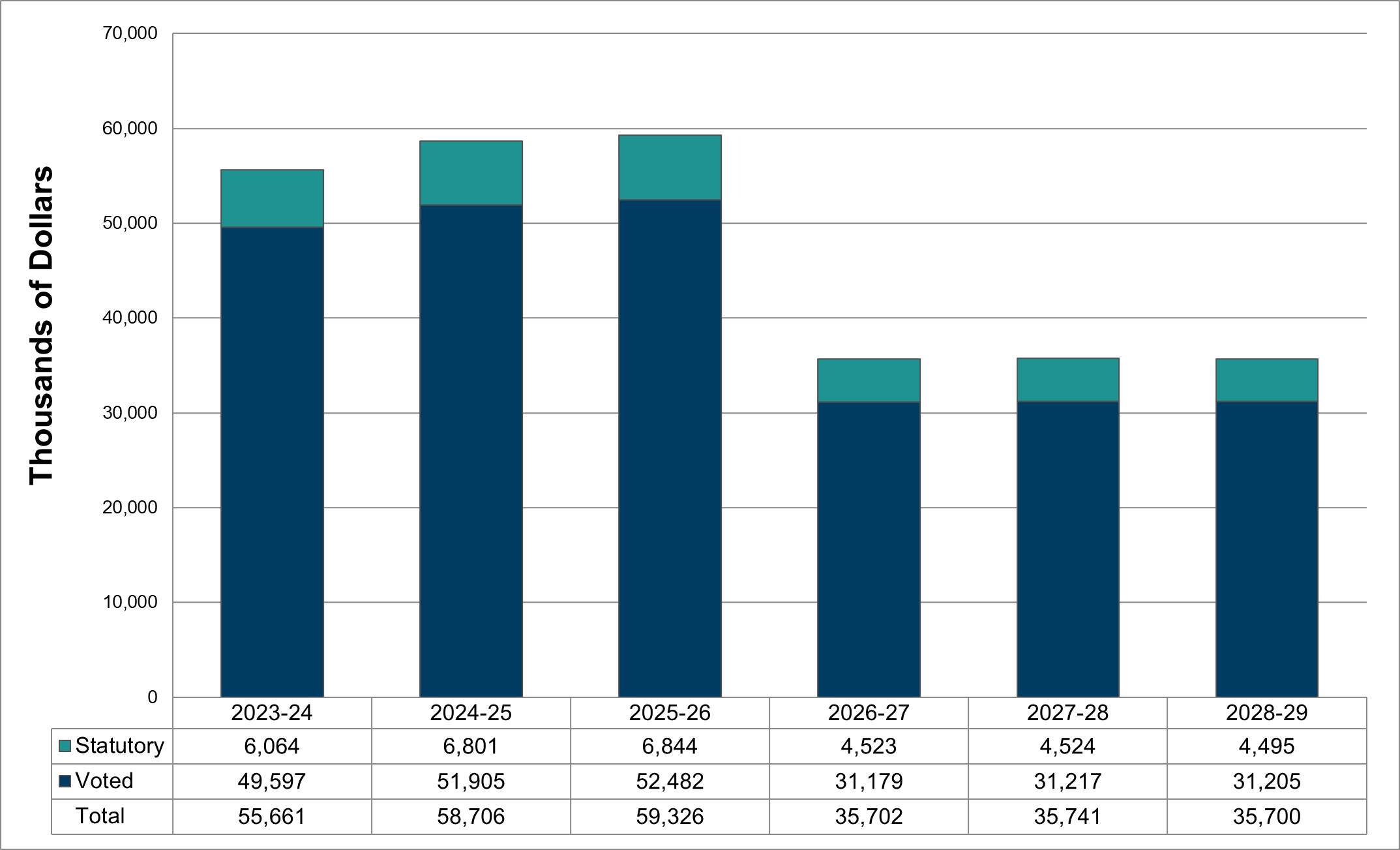
Graph 2 summarizes the department's approved voted and statutory funding from 2023-24 to 2028-29.
Text description of graph 2
This chart shows the statutory and voted expenditures (in thousands of dollars) for each fiscal year from 2023–24 to 2028–29. Voted expenditures account for the largest share each year.
| Fiscal year | Total | Voted | Statutory |
|---|---|---|---|
| 2023‑24 | 55,661 | 49,597 | 6,064 |
| 2024‑25 | 58,706 | 51,905 | 6,801 |
| 2025‑26 | 59,326 | 52,482 | 6,844 |
| 2026‑27 | 35,702 | 31,179 | 4,523 |
| 2027‑28 | 35,741 | 31,217 | 4,524 |
| 2028‑29 | 35,700 | 31,205 | 4,495 |
Analysis of statutory and voted funding over a six-year period
For fiscal years 2023-24 and 2024-25, the amounts shown represent the actual expenditures as reported in the Public Accounts.
For fiscal year 2025-26, the forecast spending represents the planned budgetary and statutory expenditures as presented in the Estimates documents (Main Estimates and Supplementary Estimates) and amounts approved by the Treasury Board as of November 7, 2025. The forecast spending for the 2025-26 fiscal year remains largely consistent with the previous fiscal year, aside from a modest increase attributable to the EBP budgetary statutory authorities granted by Parliament as well as the operating budget carry-forward allotment.
For fiscal year 2026-27, the planned spending reflects a decrease of approximately $23.9 million due to the sunsetting of temporary funds allocated under Budget 2023 (i.e., $75.9 million over three years, starting in 2023-24).
Following the sunsetting of temporary funds in the 2025-26 fiscal year, the planned spending in the 2027-28 and 2028-29 fiscal years is expected to remain consistent at approximately $36 million per year.
Generally speaking, the Agency's planned spending does not include the reimbursement of eligible paylist expenditures and the operating budget carry-forward since these cannot be estimated with certainty. In addition, the Agency's statutory spending, as indicated in the graph above, relates to the Employee Benefit Plan, which is a function of planned salary spending.
For further information on the Agency’s departmental appropriations, consult the 2026-27 Main Estimates.
Future-oriented condensed statement of operations
The future-oriented condensed statement of operations provides an overview of the Agency’s operations for 2025-26 to 2026-27.
Table 9 Future-oriented condensed statement of operations for the year ended March 31, 2027 (dollars)
Table 9 summarizes the expenses and revenues which net to the cost of operations before government funding and transfers for 2025-26 to 2026-27. The forecast and planned amounts in this statement of operations were prepared on an accrual basis. The forecast and planned amounts presented in other sections of the Departmental Plan were prepared on an expenditure basis. Amounts may therefore differ.
| Financial information | 2025‑26 Forecast results | 2026‑27 Planned results | Difference (Planned results minus forecasted) |
|---|---|---|---|
| Total expenses | 66,169,382 | 39,530,752 | (26,638,630) |
| Total revenues | - | - | - |
| Net cost of operations before government funding and transfers | 66,169,382 | 39,530,752 | (26,638,630) |
Analysis of forecasted and planned results
For fiscal year 2026-27, the planned spending reflects a decrease of $26.6 million, which is primarily due to the sunsetting of temporary funds allocated under Budget 2023 (i.e., $75.9 million over three years, starting in 2023-24).
A more detailed Future-Oriented Statement of Operations and associated Notes for 2026-27, including a reconciliation of the net cost of operations with the requested authorities, is available on the Agency’s website.
Human resources
This section presents an overview of the department’s actual and planned human resources from 2023-24 to 2028-29.
Table 10: Actual human resources for core responsibilities and internal services
Table 10 shows a summary of human resources, in full-time equivalents, for the Agency’s core responsibilities and for its internal services for the previous three fiscal years. Human resources for the 2025–26 fiscal year are forecasted based on year to date.
| Core responsibilities and internal services | 2023‑24 Actual full‑time equivalents | 2024‑25 Actual full‑time equivalents | 2025‑26 Forecasted full‑time equivalents |
|---|---|---|---|
| Independent regulatory and dispute‑resolution services for transportation providers and users | 287 | 317 | 306 |
| Internal services | 93 | 91 | 94 |
| Total | 380 | 408 | 400 |
Analysis of human resources over the last three years
In 2024-25, there is an increase in actual full-time equivalents as a result of the $4.1 million increase in 2024-25 of temporary funding provided to the Agency primarily to expand its capacity to process air passengers complaints, as per Budget 2023.
Table 11: Human resources planning summary for core responsibilities and internal services
Table 11 shows information on human resources, in full-time equivalents, for each of the Agency’s core responsibilities and for its internal services planned for the next three years.
| Core responsibilities and internal services | 2026‑27 Planned full‑time equivalents | 2027‑28 Planned full‑time equivalents | 2028‑29 Planned full‑time equivalents |
|---|---|---|---|
| Independent regulatory and dispute‑resolution services for transportation providers and users | 198 | 198 | 198 |
| Internal services | 60 | 60 | 60 |
| Total | 258 | 258 | 258 |
Analysis of human resources for the next three years
The planned number of full-time equivalents is expected to decrease over the next few years, primarily due to the sunsetting of temporary funds allocated under Budget 2023 (i.e., $75.9 million over three years, starting in 2023-24).
Federal tax expenditures
The Agency’s Departmental Plan does not include information on tax expenditures.
The tax system can be used to achieve public policy objectives through the application of special measures such as low tax rates, exemptions, deductions, deferrals and credits. The Department of Finance Canada publishes cost estimates and projections for these measures each year in the Report on Federal Tax Expenditures.
This report also provides detailed background information on tax expenditures, including descriptions, objectives, historical information and references to related federal spending programs as well as evaluations and GBA Plus of tax expenditures.
Corporate information
Departmental profile
Appropriate minister(s): The Honourable Steven MacKinnon, P.C., M.P., Minister of Transport and Leader of the Government in the House of Commons
Institutional head: France Pégeot, Chair and Chief Executive Officer
Ministerial portfolio: Transport
Enabling instrument(s): Canada Transportation Act, S.C. 1996, c. 10, as amended
Year of incorporation / commencement: 1904
Other:
The Agency shares responsibility for the following acts:
- Accessible Canada Act, 2019
- Canada Marine Act
- Canadian Environmental Assessment Act, 2012
- Civil Air Navigation Services Commercialization Act
- Coasting Trade Act
- Energy Supplies Emergency Act
- Pilotage Act
- Railway Relocation and Crossing Act
- Railway Safety Act
- Shipping Conferences Exemption Act, 1987
The Agency has sole responsibility for the following regulations:
- Accessible Transportation for Persons with Disabilities Regulations, SOR/2019-244
- Accessible Transportation Planning and Reporting Regulations, SOR/2021-243
- Air Passenger Protection Regulations, SOR/2019-150
- Air Transportation Regulations, SOR/88-58
- Canadian Transportation Agency Designated Provisions Regulations, SOR/99-244
- Regulations on Operational Terms for Rail Level of Services Arbitration (SOR/2014-192)
- Personnel Training for the Assistance of Persons with Disabilities Regulations, SOR/94-42
- Railway Costing Regulations, SOR/80-310
- Railway Interswitching Regulations, SOR/88-41
- Railway Third Party Liability Insurance Coverage Regulations, SOR/96-337
- Railway Traffic and Passenger Tariffs Regulations, SOR/96-338
- Railway Traffic Liability Regulations, SOR/91-488
The Agency shares responsibility for the following regulations:
- Transportation Information Regulations, SOR/96-334
- Railway Company Pay Out of Excess Revenue for the Movement of Grain Regulations, SOR/2001-207
- The Jacques-Cartier and Champlain Bridges Inc. Regulations, SOR/98-568
- The Seaway International Bridge Corporation, Ltd. Regulations, SOR/98-569
The Agency has promulgated the following Rules:
- Canadian Transportation Agency Rules (Dispute Proceedings and Certain Rules Applicable to All Proceedings), SOR/2014-104
- Rules of Procedure for Rail Level of Service Arbitration, SOR/2014-94
These acts and regulations are available on the Department of Justice website, and are accessible through the “Acts and Regulations” section of the Agency's website.
Departmental contact information
- Mailing address
- Canadian Transportation Agency
60 Laval Street, Unit 01, Gatineau, Québec J8X 3G9
Telephone: 1-888-222-2592
Fax: 819-997-6727
Email: info@otc-cta.gc.ca
Website(s): https://www.otc-cta.gc.ca
Definitions
List of terms
- appropriation (crédit)
- Any authority of Parliament to pay money out of the Consolidated Revenue Fund.
- budgetary expenditures (dépenses budgétaires)
- Operating and capital expenditures; transfer payments to other levels of government, organizations or individuals; and payments to Crown corporations.
- core responsibility (responsabilité essentielle)
- An enduring function or role performed by a department. The intentions of the department with respect to a core responsibility are reflected in one or more related departmental results that the department seeks to contribute to or influence.
- Departmental Plan (plan ministériel)
- A document that sets out a department’s priorities, programs, expected results and associated resource requirements, covering a three‑year period beginning with the year indicated in the title of the report. Departmental Plans are tabled in Parliament each spring.
- departmental result (résultat ministériel)
- A change that a department seeks to influence. A departmental result is often outside departments’ immediate control, but it should be influenced by program-level outcomes.
- departmental result indicator (indicateur de résultat ministériel)
- A factor or variable that provides a valid and reliable means to measure or describe progress on a departmental result.
- departmental results framework (cadre ministériel des résultats)
- A framework that consists of the department’s core responsibilities, departmental results and departmental result indicators.
- Departmental Results Report (rapport sur les résultats ministériels)
- A report on a department’s actual performance in a fiscal year against its plans, priorities and expected results set out in its Departmental Plan for that year. Departmental Results Reports are usually tabled in Parliament each fall.
- full time equivalent (équivalent temps plein)
- A measure of the extent to which an employee represents a full person‑year charge against a departmental budget. Full-time equivalents are calculated as a ratio of assigned hours of work to scheduled hours of work. Scheduled hours of work are set out in collective agreements.
- gender-based analysis plus (GBA Plus) (analyse comparative entre les sexes plus [ACS Plus])
- An analytical tool used to support the development of responsive and inclusive policies, programs and other initiatives. GBA Plus is a process for understanding who is impacted by the issue or opportunity being addressed by the initiative; identifying how the initiative could be tailored to meet diverse needs of the people most impacted; and anticipating and mitigating any barriers to accessing or benefitting from the initiative. GBA Plus is an intersectional analysis that goes beyond biological (sex) and socio-cultural (gender) differences to consider other factors, such as age, disability, education, ethnicity, economic status, geography, language, race, religion, and sexual orientation.
- government priorities (priorités pangouvernementales)
- For the purpose of the 2025–26 Departmental Plan, government priorities are the high-level themes outlining the Government’s agenda in the November 23, 2021, Speech from the Throne: building a healthier today and tomorrow; growing a more resilient economy; bolder climate action; fight harder for safer communities; standing up for diversity and inclusion; moving faster on the path to reconciliation and fighting for a secure, just, and equitable world.
- horizontal initiative (initiative horizontale)
- An initiative in which two or more federal organizations are given funding to pursue a shared outcome, often linked to a government priority.
- Indigenous business
- As defined on the Indigenous Services Canada website in accordance with the Government of Canada’s commitment that a mandatory minimum target of 5% of the total value of contracts is awarded to Indigenous businesses annually.
- non‑budgetary expenditures (dépenses non budgétaires)
- Net outlays and receipts related to loans, investments and advances, which change the composition of the financial assets of the Government of Canada.
- performance (rendement)
- What an organization did with its resources to achieve its results, how well those results compare to what the organization intended to achieve, and how well lessons learned have been identified.
- performance indicator (indicateur de rendement)
- A qualitative or quantitative means of measuring an output or outcome, with the intention of gauging the performance of an department, program, policy or initiative respecting expected results.
- plan (plan)
- The articulation of strategic choices, which provides information on how an organization intends to achieve its priorities and associated results. Generally, a plan will explain the logic behind the strategies chosen and tend to focus on actions that lead up to the expected result.
- planned spending (dépenses prévues)
- For Departmental Plans and Departmental Results Reports, planned spending refers to those amounts presented in the Main Estimates.
- A department is expected to be aware of the authorities that it has sought and received. The determination of planned spending is a departmental responsibility, and departments must be able to defend the expenditure and accrual numbers presented in their Departmental Plans and Departmental Results Reports.
- program (programme)
- Individual or groups of services, activities or combinations thereof that are managed together within a department and that focus on a specific set of outputs, outcomes or service levels.
- program inventory (répertoire des programmes)
- An inventory of a department’s programs that describes how resources are organized to carry out the department’s core responsibilities and achieve its planned results.
- result (résultat)
- An external consequence attributed, in part, to an organization, policy, program or initiative. Results are not within the control of a single organization, policy, program or initiative; instead, they are within the area of the organization’s influence.
- statutory expenditures (dépenses législatives)
- Expenditures that Parliament has approved through legislation other than appropriation acts. The legislation sets out the purpose of the expenditures and the terms and conditions under which they may be made.
- target (cible)
- A measurable performance or success level that an organization, program or initiative plans to achieve within a specified time period. Targets can be either quantitative or qualitative.
- voted expenditures (dépenses votées)
- Expenditures that Parliament approves annually through an Appropriation Act. The vote wording becomes the governing conditions under which these expenditures may be made.
- Date modified: