
Standing Senate Committee on National Finance for the study of the Main Estimates for the fiscal year ending March 31, 2027
Opening remarks
Mr. Chair, Honourable Senators, Members of the Committee:
Thank you for your invitation to discuss the Canadian Transportation Agency’s (Agency) programs.
[If not introduced: With me is Ruth Dagenais, Director General, responsible for the Air Travel Complaints Resolution Office]
Created under the Canada Transportation Act (Act), the Agency is both a regulator and an independent administrative tribunal. Its mandate covers the entire federal transportation network, including the aviation, rail, and marine sectors. Its three broad roles are, to help ensure that the national transportation system functions efficiently, to provide consumer protection for air passengers, and to protect the human right of persons with disabilities to an accessible transportation network.
As an economic regulator, the Agency develops and applies ground rules that establish the rights and responsibilities of transportation service providers and users and that level the playing field among competitors. These rules can be binding regulations, guidelines, or codes of practice. It also issues a variety regulatory authorities including those required to operate federal transportation in Canada such as permits and licenses.
As a tribunal, the Agency hears and resolves disputes between transportation service providers and their clients or surrounding communities, using various tools both formal and informal.
Given the significant public interest in the number of complaints received by the Agency, I would like to take this opportunity to share with this committee some information on the steps we have taken and continue to take to maximize the number of complaints we process.
To put the situation in context, up until 2016, the Agency received roughly 850 air passenger complaints per year. This steadily grew over the following three years, culminating in a significant increase after the coming into force of the Air Passenger Protection Regulations (APPR), where in 2019-20, the number of cases received reached almost 20,000. Over the last three years, more than 40,000 complaints per year were received, a trend that is continuing. In January of 2026 we received the highest ever monthly volume of complaints at 5,685. March 2026 was nearly as high with 5,682 complaints received.
While the number of incoming complaints is not within the Agency’s control, the Agency has been working to maximize the use of its available resources and increase its processing capacity.
Although the Agency has been undertaking initiatives and reviews to increase productivity for many years, the transformation really began when, at the beginning of 2023, the Agency was provided $75.9 million over three years primarily to support the processing of air passenger complaints and when parliament made changes to the Act in June 2023 to modify how the Agency processes air passenger complaints. In only three months, the Agency launched the completely redesigned Complaints Resolution Office (CRO), a more straightforward, rapid, and cost-effective system.
During its first two full fiscal years of operation, the CRO closed over 32,000 complaints per year, a roughly 200% increase in comparison to the full fiscal year preceding the creation of the CRO, when 11,158 cases were closed.
While we believe that gain in productivity is an important success, the Agency is continuing to develop new tools, processes, and strategies to continue to increase the number of complaints that can be resolved with our resources, including leveraging artificial intelligence. As a result of the investments we have made over the past year we have set an ambitious target of closing 45,000 complaints this fiscal year. This would represent an additional 50% improvement in productivity and bring the Agency’s processing capacity in line with the current rate of complaints being submitted.
I would note that, at the time of the tabling of the Main Estimates, a decision on certain budget renewals, including the Agency’s temporary funding, had not yet been made. The Spring Economic Update introduced by the government yesterday now confirms that this temporary funding has been renewed for the next two years.
Thank you, Mr. Chair and Honourable Senators. I would be pleased to respond to questions.
Committee Members (May 26, 2025 – Present)
Claude Carigan – Chair, Conservative Party of Canada
Appointed to the Senate on August 27, 2009, the Honourable Claude Carignan, P.C., served as Leader of the Opposition in the Senate from November 2015 to March 2017.
He is currently a member and Chair of the Standing Senate Committee on National Finance, a member and Vice-Chair of the Senate Subcommittee on Estimates and Committee Budgets, a member of the Standing Senate Committee on National Security and Defence, the Standing Senate Committee on Ethics and Conflict of Interest for Senators, and the National Security and Intelligence Committee of Parliamentarians.
Previously, he served on the Standing Senate Committee on Internal Economy, Budgets and Administration, the Standing Senate Committee on Legal and Constitutional Affairs, and the Special Joint Committee on the Declaration of Emergency. Prior to serving as Leader of the Opposition in the Senate, Senator Carignan was appointed Leader of the Government in the Senate by the Prime Minister of Canada in August 2013, as well as a member of the Cabinet, a position he held until the fall of 2015.

Éric Forest – Co-Chair, Independent Senators Group
Éric Forest was appointed to the Senate of Canada as an independent senator on November 23, 2016. He is currently Vice-Chair of the Standing Senate Committee on National Finance as well as a member of the Standing Senate Committee on Internal Economy, Budgets and Administration, and chairs the Subcommittee on Senate Estimates and Committee Budgets. He is also involved with the Assemblée parlementaire de la Francophonie and the Canada-Europe Parliamentary Association.

Andrew Cardozo – Progressive Senator Group
Senator Andrew Cardozo was appointed to the Senate of Canada in November 2022. An independent senator, he is a member of the Progressive Senate Group. Since becoming a senator, Cardozo has focused on the number one job of senators, which is to review legislation introduced by the elected government in the House of Commons. He is a member of Senate committees on Security and National Defence, and National Finance.
He was formerly a member of the Senate Transport and Communications Committee. He chairs the Arts and Heritage Advisory Working Group which focuses on the arts and heritage of the current Senate Building and plans for the return to Centre Block.
He has also sought to prioritize issues of Canada-US relations, polarization in political discourse, the crisis afflicting Canada’s news media, and the future of the important Canadian national broadcaster CBC/Radio-Canada. The pedestrianization of Wellington Street (the street in front of the Parliament Buildings) is also a priority—to enhance this iconic venue and increase security for Parliamentarians and the visiting public.
Public Interventions on CTA Activities
At the meeting on May 16, 2023, Senator Cardozo asked Jeff Morrison, then-President and CEO of the National Airlines Council of Canada, and Duncan Dee, former Air Canada Chief Operating Officer, if they, or the government, have to weigh, on the one hand, the rights of the passenger and, on the other hand, the viability of the businesses, which are the airlines?
Appearance at the Standing Committee on Transport and Communications – May 16, 2023
Senator Cardozo was present for Mme. Pégeot’s appearance and was interested in the CTA’s responsibilities and how they differ and relate to Transport Canada, and whether the CTA makes its own regulations or if the Minister makes them. He was also interested in how the CTA weighs decisions between passengers’ rights and business viability, citing the example of interswitching, and whether railway companies withdraw their services or reduce their services if they find it too costly, and whether, with passengers’ rights in general, if the CTA is dealing with weighing the business case.

Pierre J. Dalphond – Independent Senators Group
He was appointed on June 6, 2018, for the De Lorimier Division (Quebec) on the suggestion of the Board and the recommendation of the Prime Minister. In 1995, he was appointed a Justice of the Quebec Superior Court. In 2002, he was elevated to the Quebec Court of Appeal. He wrote leading judgements on language rights, freedom of association, freedom of speech, treaty rights, separation of powers, class action, sharing of parental responsibilities and abuse of judicial process.
Throughout his career, he has written numerous legal articles, taught in faculties, given talks in Canada and abroad and organized training programs for judges (notably China, Brazil and Rwanda). He has been regularly involved with various social, cultural and political organizations. In recognition of Senator Dalphond’s contributions, he was made a graduate emeritus of the University of Montreal. He was also awarded the Queen’s Golden Jubilee Medal and the Governor General’s Academic Medal and was made an honorary member for life of the Young Bar of Montreal.

Rose Galvez – Independent Senators Group
Senator Galvez was appointed to the Senate on December 6, 2016, representing Québec (Bedford). She is currently a member of the Standing Senate Committee on Energy, the Environment and Natural Resources, and a member of the Standing Senate Committee on National Finance. Since her appointment, she has also served on the Standing Senate Committee on Transport and Communications and the Special Committee on the Arctic.
She has published several policy papers including a discussion paper on Canada’s building codes and a white paper on a clean and just recovery from the COVID-19 pandemic. In March 2022, she published a white paper on Aligning Canadian Finance with Climate Commitments, which led to the introduction of Bill S-243, the Climate-Aligned Finance Act, legislation to help guide Canada’s financial sector in its transition to a net-zero economy.
Originally from Peru, she is one of Canada’s leading experts in pollution control and its effect on human health. She has a Ph.D. in Environmental Engineering from McGill University and was a professor at Université Laval à Québec for over 25 years, heading the Civil and Water Engineering Department from 2010 to 2016. She specializes in water and soil decontamination, waste management and residues, sustainable development, environmental impact assessments, and climate risk to infrastructure.

Clément Gignac – Canadian Senators Group
The Honourable Clément Gignac is an economist with over 35 years of experience in the public and private sectors. He was appointed as Senator on July 29, 2021. As a Senator, he sits on the Senate's Standing Committee on National Finance and on the Banking, Commerce and the Economy committee. Senator Gignac also co-chairs the Canada-ASEAN Interparliamentary Friendship Group and the Canada-Belgium Parliamentary Friendship Group. From 2012 until he became a Senator, Mr. Gignac held the position of Senior Vice-President and Chief Economist at iA Financial Group. He was the Group’s spokesperson on economic matters and chaired the Asset Allocation Committee.
Prior to joining iA Financial Group, Mr. Gignac worked as an economist and strategist for major financial institutions, including as Vice-President and Chief Economist for National Bank Financial from 2000 to 2008. In 2009, Mr. Gignac was elected as a member of the National Assembly of Québec. He was named Minister of Economic Development, Innovation and Export Trade in the Quebec government, and went on to serve as Minister of Natural Resources and Wildlife from 2011 to 2012. On the international scene, he chaired the World Economic Forum’s council on competitiveness in 2012. He is also an associate member of the Conference of Business Economists, a group of distinguished global economists based in Washington, D.C.
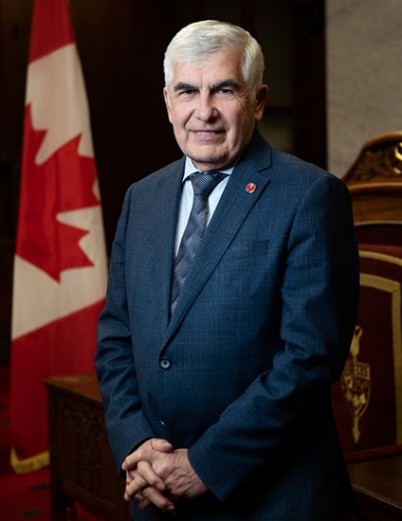
Martine Hébert – Independent Senators Group
Martine Hébert is a renowned economist and former Quebec diplomat with considerable experience in economic development, public affairs, international and business relations, and governance. Before being appointed to the Senate in February 2025, Ms. Hébert was a media economic analyst and lecturer. She contributed to the economic development of Quebec and Canada through her career in renowned public and private organizations.
In recent years, she has served as Quebec’s Delegate in Chicago (2019-2021) and Quebec’s Delegate General in New York (2021-2024). She has also served as Senior Vice-President, Quebec, and National French Spokesperson for the Canadian Federation of Independent Business (CFIB), where she worked for nearly 10 years. Prior to that, Ms. Hébert ran her own public affairs firm and worked for the Ordre des conseillers en ressources humaines agréés du Québec.
She has been an associate commissioner for the Great Lakes Commission, a member of the board for the Commission des normes, de l’équité, de la santé et de la sécurité du travail, a member of Quebec’s Commission des partenaires du marché du travail, co-chair of Quebec’s Comité-conseil sur l’allègement réglementaire et administratif, and a member of Quebec’s Comité consultatif du travail et de la main-d’œuvre. She has also done community work for many years, notably as the chair of the board of directors for the Centre des femmes du Plateau Mont-Royal.

Joan Kingston – Independent Senators Group
Joan Kingston was appointed to the Senate in October 2023. She is a registered nurse and a former member of the Legislative Assembly of New Brunswick. She is currently a consultant with the University of New Brunswick’s (UNB) Faculty of Nursing, having recently retired from UNB after 10 years as nurse manager, co-manager of the Fredericton Downtown Community Health Centre, and a lecturer and clinical instructor.
Before her work with UNB, Ms. Kingston worked as a principal secretary for government affairs in the Office of the Premier of New Brunswick, and as a senior advisor to the Policy and Priorities Committee of the Cabinet of New Brunswick, from 2006 to 2010. She also served as a senior policy advisor in the Office of the Official Opposition from 2002 to 2006. From 1995 to 1999, Ms. Kingston served as Member of the Legislative Assembly for New Maryland and, as a minister, she led various portfolios including Labour, Environment, and Human Rights. She also led the Minister’s Advisory Committee on Multiculturalism and chaired the New Brunswick Advisory Council on the Status of Women.
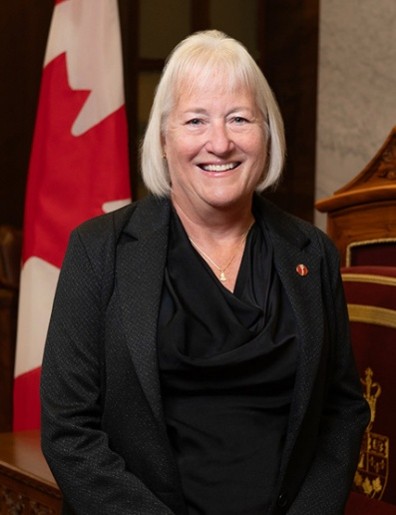
Jane MacAdam – Independent Senators Group
The Honourable Jane MacAdam, FCPA, CA, was appointed to the Senate of Canada in May 2023. Previously, she served as the Auditor General of Prince Edward Island from 2013 to 2020. This involved conducting various audits and examinations ranging from financial audits on the Public Accounts of the Province, crown corporations and agencies, as well as performance audits and examinations on a broad range of topics including, but not limited to, social assistance, health care, education, economic development, and housing programs to broader issues such as governance, performance reporting, lottery and gaming, and climate change.
Throughout her career, she has been a member of various professional organizations, including the Canadian Council of Legislative Auditors and several of its committees including strategic matters, governance, and health. Ms. MacAdam has been a longtime member of the Canadian Audit and Accountability Foundation, a foundation dedicated to advancing public sector performance audit, oversight, and accountability in Canada and abroad. Moreover, in 2022 she completed a three-year volunteer term on the Board of Directors of this Foundation and was appointed to the Departmental Audit Committee for Veterans Affairs Canada and served as its Chair prior to her appointment to the Senate. Ms. MacAdam was awarded a Fellow designation from the Chartered Professional Accountants of Prince Edward Island, in recognition of her exceptional leadership and service to the profession.

Krista Ross – Canadian Senators Group
Krista Ross was appointed to the Senate of Canada representing New Brunswick on October 31, 2023, and sworn in on November 21, 2023. Ms. Ross is a business and community leader who worked with the Fredericton Chamber of Commerce for 20 years - from 1989 to 1997 as GM and from 2011 to 2023 as CEO. In these roles, she was a leading voice supporting Fredericton and New Brunswick’s development as a place of opportunity for individuals, businesses, and community organizations.
In 2022, Ms. Ross was appointed as a commissioner with the Electoral Boundaries and Representation Commission for New Brunswick. She also served on the board of the Fredericton Community Foundation, the University of New Brunswick Business Faculty Advisory Board, and the Ignite Fredericton Seed Board. She is an active supporter of immigration, and has provided mentorship and support to newcomers in Canada.
Ms. Ross has been celebrated for her community involvement and business leadership. In 2023, she was named to the Chamber of Commerce Executives of Canada’s Council of Excellence, as well as twice named Chamber Executive of the Year in Canada, and named a Top 50 CEO for Atlantic Canada. She is also a recipient of the Advocacy in Action Silver Award from the Canadian Chamber of Commerce. In 2022, she was recognized by the New Brunswick Community College as an Alumna of Distinction; she also received the Queen Elizabeth II Platinum Jubilee Medal. In 2025, she was awarded the King Charles III Coronation Medal.

Key issues
Consumer protection for air passengers
APPR
Key messages:
- The amendments to Canada Transportation Act (the Act) requiring changes to the APPR were initiated by the Government and formalized in the Budget Implementation Act, 2023.
- In December 2024, proposed amendments to the APPR were published in the Canada Gazette, Part I for public comment.
- The proposal represents an overall increase in passenger protection, and in particular the changes to assistance (also known as standards of treatment, which includes food, drink, access to a means of communication, and overnight accommodations if necessary) were appreciated by consumers and consumer organizations.
- Estimated incremental cost of CGI regulatory proposal is $0.99 per passenger segment.
- Under the Act, the Agency must consult with the Minister when making regulations.
- Like the head of any other agency, the Agency's Chair and CEO meets with the minister and his or her office, to discuss matters including resources, its operations, and potential regulatory amendment proposals.
- As the amendments to the APPR have not yet been finalized, the CTA cannot comment on the specifics or ongoing discussions.
Background on the Budget Implementation Act, 2023
Made changes to the Act which, once in force:
- Eliminates the three flight disruption categories that would also be eliminated in the amended APPR provisions are made and brought into force.
- Puts the burden on airlines to prove that compensation does not have to be paid for a specific flight disruption.
- Requires the APPR to provide:
- Minimum compensation for inconvenience be paid to passengers, except in exceptional circumstances to be specified by the regulations;
- Minimum assistance for passengers in the case of all flight disruptions, including in the exceptional circumstances prescribed by the regulations; and
- Refund obligations related to the issuance of a Government of Canada travel advisory.
- Allows the Agency (through regulation) to increase the maximum administrative monetary penalties (fines) it can impose on airlines from $25,000 to $250,000 for violations of the APPR, as well as enter into compliance agreements in relation to violations of the APPR.
Background on CGI proposal:
- Creates a list of 13 exceptional circumstances for flight disruptions, including:
- Meteorological conditions,
- A hidden manufacturing defect that could affect flight safety and requires immediate assessment.
- An unforeseeable technical defect or problem, despite required maintenance being up-to-date.
- Labour disruptions.
- Knock-on effects limited to 24 hours for large airlines (no limit for small airlines).
- Provides compensation for inconvenience to passengers, except in exceptional circumstances;
- Provides assistance to passengers in the case of all flight disruptions;
- Ensures that passengers complete their itinerary or receive a refund;
- Requires more proactive communications with passengers during a flight disruption;
- Requires seating of children under the age of 14 next to their parent or guardian;
- Requires air carriers to provide refunds when a passenger cancels a reservation due to the issuance of certain Government of Canada (GoC) travel advisory.
Background on CGI comments received:
Key comments from consumers/consumer organizations:
- exceptional circumstances are too broad and should not include mechanical/technical circumstances;
- small carriers should have limits to knock-on effects;
- small carriers should have to rebook passengers more quickly;
- assistance should not be limited to 72 hours.
Key comments from industry:
- exceptional circumstances list should not be exhaustive;
- exceptional circumstances should better consider safety related issues;
- exceptional circumstances should include issues related to the airports or other third parties;
- knock-on effect window should be 48 hours;
- carriers should have longer to rebook for exceptional circumstances;
- refunds should only be required when passengers cancel reservations as a result of “avoid all travel” GoC travel advisories;
- carriers should have more than 15 days to issue refunds;
- during exceptional circumstances, the period during which carriers have to provide assistance should be shortened;
- the proposed amendments will negatively impact regional connectivity.
Backlog
Key messages:
- The backlog is driven mainly by the significant increase in complaints being submitted.
- The CTA has received for a 4th straight year, over 40,000 complaints.
- Up until 2016, roughly 850 air passenger complaints per year.
- After the coming into force of the Air Passenger Protection Regulations (APPR), in 2019-20 almost 20,000 complaints submitted.
- Complaints against Air Canada represent 40% of the backlog.
- Complaints against West Jet represent 26% of the backlog.
- Complaints against Flair represent 8% of the backlog.
- Flight disruptions, account for the highest volume of cases received (87%). 51% of all cases seek compensation as a remedy.
- 97% of the current backlog consists of complaints received in 2024 or later.
CRO
Key messages:
- Implemented in only 3 months, as required by legislation, the CRO incorporates early eligibility screening, standardized workflows, and enhanced automation.
- During its first two full fiscal years of operation, the CRO closed roughly 33,000 complaints per year, a roughly 200% increase in comparison to the full fiscal year preceding the creation of the CRO, when 11,158 cases were closed.
- The CTA continues to develop new tools, processes, and strategies to maximize the number of complaints that can be resolved and is currently working to leverage artificial intelligence to aid resolution officers allowing them to render decisions more quickly.
- Assuming the temporary budget is renewed [SB1.1] and that the CTA maintains its current resources, the CTA has set an ambitious target of closing 45,000 complaints next fiscal year.
- The legislation provides 90 days for the entire complaints process to be completed. Once a resolution officer begins working on a complaint, a decision is issued on average within 39 days.
- Currently, the Agency has roughly 117 designated ROs.
Current wait times:
- Agency cannot estimate the projected wait time for new complaints, as an important variable of its workload is the number of complaints it receives, which is not predictable. And we are setting a significantly higher and ambitious target of completed complaints for next year (45,000)
- Processing timelines for complaints over the past 2 years:
- Average time from submission of a complaint until its closure: 715 days
Challenges of processing complaints
- Some aspects of the APPR have proven to be overly complex and/or unclear for carriers and passengers to understand and implement, especially as a result of the Act requiring various passenger entitlements depending on three different categories of reasons for flight disruptions deciding what a passenger is entitled to depend heavily on the exact circumstances of each case and requires several factors to be weighed.
- When making a decision, ROs must assess each individual complaint based on its own unique set of facts as provided by the passengers and the airline.
- Airline responses to these complaints can also be extensive, at times including upwards of 80-100 pages of technical information.
Confidentiality
- As stated in the Canada Transportation Act “all matters related to the process of dealing with a complaint shall be kept confidential, unless the complainant and the carrier otherwise agree”.
- Some key information from CRO decisions of importance to passengers is proactively published on the CTA's website as prescribed by the Act, that is:
- The number of the flight to which the order relates;
- The date of departure of the flight that is indicated on the complainant’s ticket;
- Whether any flight delay, flight cancellation or denial of boarding was within the carrier’s control, was within the carrier’s control but was required for safety reasons or was outside the carrier’s control; and
- Whether or not the complaint resolution officer ordered the carrier to provide compensation or a refund.
- The provisions making the CRO process confidential is currently being challenge in Ontario's Superior Court of Justice.
Cost recovery
Key messages:
- Cost recovery for air travel complaints was initiated by the Government and formalized through the Budget Implementation Act, 2023.
- Amendments made to the Act require the Agency to establish a fee to recover costs of processing complaints.
- Ministers of Transport have requested to be consulted in the process and the Agency does not have an issue with that request.
- The Agency cannot comment on the specifics of the cost recovery fee as it has not yet been finalized
- Cost recovery is a fiscal tool linked to the cost of processing eligible complaints, not the outcome of the complaints.
Background:
- Since 2023, the Act requires the CTA to establish a fee to airlines per eligible complaint processed by the CTA.
- Complaint eligibility is defined by Subsections 85.04(1) and 85.04(2) of the Canada Transportation Act.
- 85.04(1) A person may file a complaint in writing with the Agency if:
- the person alleges that a carrier failed to apply a fare, rate, charge or term or condition of carriage applicable to the air service it offers that is set out in its tariffs;
- the person is adversely affected by the failure to apply that fare, rate, charge or term or conditions of carriage;
- the person seeks compensation or a refund as set out in the carrier's tariffs or compensation for expenses incurred as a result of that failure; and
- the person made a written request to the carrier to resolve the matters to which the complaint relates but they were not resolved within 30 days after the day on which the request was made.
- 85.04(2) A complaint resolution officer may refuse to deal with a complaint or, at any time, cease dealing with it if they are of the opinion that:
- the criteria set out in subsection (1) have not been met;
- it is clear on the face of the complaint that the carrier has complied with the obligations set out in its tariffs; or
- the complaint is vexatious or made in bad faith.
- The CTA may also, after consultation with the Minister, implement a broader cost recovery regime (regulatory charge) for all CTA activities.
- In the fall 2024, the CTA consulted on a proposed fixed fee of $790 per eligible complaint (60% of its costs) which would cost industry $0.25 per flight segment.
- Received 83 submissions, which cover a broad range of topics regarding the fee proposal, and have been published on our website in full.
What we heard:
- Key points mentioned by the general public and consumer organizations:
- majority in favor of the proposed fee, arguing the fee could incentivize airlines to be more proactive/efficient in the complaint process
- concerned that the fee would result in costs being passed onto air passengers
- Some expressed that the Agency should collect 100% of its costs from airlines
- Key points mentioned by industry:
- Questioned the legality of the fee
- Would lead to passengers filing unmeritorious claims
- Would increase cost of travel
- Would have negative impacts on small airlines
- Would negatively impact Canadian regional connectivity
Air Canada complaint resolution pilot project
Key messages:
- The Agency was made aware of this initiative by Air Canada
- Air Canada’s pilot project is not being run by the Agency, and it does not replace the Agency’s complaint resolution process, which has been created by and who’s powers come from, the Canadian Transportation Act.
- The Agency encourages airlines to find ways to resolve complaints directly with their passengers
- Passengers’ participation in this pilot project is entirely voluntary
- Passengers who accept the decision reached under this pilot project, will be asked to withdraw their complaint from the Agency. Passengers not satisfied with the outcome, will not lose their position in the Agency’s queue and their complaint with the Agency will remain active
Accessibility
Accomplishments
Key messages:
- We set three important goals based on the most significant issues observed:
- Reducing the damage to and breaking of mobility aids;
- Improving training of transportation service providers employees; and,
- Promoting a consistent accessible air travel network for passengers internationally.
- We were very pleased to hear from our Accessibility Advisory Committee in January 2026, that they have observed important progress on these very issues.
- We have seen an increase in accessibility complaints, from 625 in 2024-25 to a total of 666 in 2025-26. In response, we have implemented a plan to improve our processing capacity which has already grown by 18 percent.
- Although the complaints received by the Agency provide some insight into the issues at hand, access to more fulsome accessibility data continues to be a challenge.
- The Accessible Transportation for Persons with Disabilities Regulations (ATPDR) are world leading, covering every stage of the travel journey and focusing on the areas persons with disabilities identified as most important: communications, services, equipment and infrastructure, and training for airline and airport staff.
- We use a combination of formal and informal tools to ensure compliance with the regulations, as well as to prevent issues from occurring or recurring.
- Even in the absence of a filed complaint, when the Agency becomes aware of an incident (such as through media reports), its enforcement team reviews the incident and may undertake an investigation.
Mobility aids
- Airlines are required to provide assistance with respect to mobility aids, including passenger transfers, to quickly repair damaged mobility aids, or replace lost mobility aids, and to assist a person with a disability in boarding and disembarking an aircraft.
- The ATPDR require that personnel be trained in a number of areas, including on how to handle mobility aids, appropriately transfer passengers between mobility aids, and between a mobility aid and their seat.
- Airlines must make every reasonable effort to permit a person with a disability who uses a walker or manual folding wheelchair to store it on board the aircraft.
- Airlines may require a person with a disability to provide information or documents, including a medical certificate, that are reasonably necessary for the carrier to assess a person's request for services.
Key initiatives from the past few years:
- Safe Securement and Containment of Mobility Aids in the Cargo Compartment:
- In collaboration with Transport Canada (TC), the Agency engaged the National Research Council (NRC) to study and analyze, in detail, the securement and containment of mobility aids in airplane cargo holds.
- Job Aids for the Safe Handling and Stowage of Mobility Aids During Air Travel:
- In collaboration with TC, the Agency engaged the NRC to develop a practical job aid (contains reference material such as stickers, cards, and posters) about safely handling and transporting mobility aids for ground handlers, check-in agents, and other airline personnel.
- International Working Group for Special Service Request Codes:
- In collaboration with NRC, the Agency mobilized an international working group to study challenges and provide recommendations in using the International Air Transport Association (IATA) Special Service Request (SSR) codes in the air travel industry.
- IATA is in the process of reviewing the recommendations.
- The Agency established the Canadian Mobility Aid Working Group (which includes airlines, airports, their respective associations, and representatives of Persons with Disabilities (PWDs)) to:
- Generate ideas for voluntary initiatives to improve the carriage of mobility aids;
- Share information on best practices; and,
- Support the development of Technical Guidelines for the Securement of Mobility Aids (funded by Accessibility Standards Canada).
- Training
- Helping to develop guidance, in consultation with PWDs, for transportation service providers to improve employees’ training.
International strategy
- Given the international nature of air travel, advancing accessibility requires collaboration across borders. Working with international partners helps promote consistent standards and practices, ensuring that passengers with disabilities benefit from a seamless and accessible travel experience from departure to arrival.
- The Agency plays a leadership role with respect to the International Civil Aviation’s (ICAO) work to develop an international accessibility strategy aimed at establishing a framework for strengthening consistency and coordination across the global aviation system. We are optimistic ICAO will adopt this strategy this year.
Auditor General report
- The Agency has implemented all recommendations found in the Auditor General’s report
- Accessibility enforcement staffing levels were increased from 4 FTEs to 6 FTEs and the number of inspections and investigations was also significantly increased
- The Agency requested data from carriers on a voluntary basis and received limited data. More comprehensive data is not likely to be available until legislation makes it mandatory.
- In 2024, the Agency launched a pilot project that involved shadowing persons with disabilities during their travel to gain a deeper understanding of the unique challenges they face.
One Person, One Fare
- In 2020, the ATPDR came into force, including a requirement to provide one person, one fare (1P1F) for domestic travel.
- The Agency consulted on extending 1P1F to international travel. Canadian and foreign airlines strongly opposed on the basis that a requirement for 1P1F would be inconsistent with the provisions of Canada's bilateral air agreements that allow airlines the freedom to establish prices and that limit the ability of aeronautical authorities to interfere with such prices. This position was supported by Global Affairs Canada and Transport Canada.
Compliance and Enforcement
Enforcement policy/strategy
- The Agency is responsible for about 700 regulatory provisions, with respect to over 1,500 transportation service providers.
- In 2022 the Agency introduced its updated Compliance and Enforcement Policy, a new results-based and risk-informed approach which applies to all Agency programs engaged in compliance monitoring and enforcement activities.
- The policy’s guiding principles are:
- Results-based enforcement (choosing measures that best serve the public interest and consider the specific context and circumstances of each case);
- Data-driven and risk-informed decision-making (targeting resources where potential non-compliance may be present or will occur in the future.)
- Fair, objective, consistent processes (including clear and well-communicated rules for inspections and investigations, applied impartially);
- Proactive and responsive enforcement; and
- Transparency (publishing the results of formal enforcement actions on the website).
- The Policy sets out how the Agency targets its compliance monitoring and enforcement resources to maximize proactive compliance by regulated entities with the legal obligations the Agency oversees.
- The public interest is best served when regulated parties voluntarily comply with their legal obligations. To that end, the Compliance and Enforcement Policy includes a continuum that first encourages compliance through outreach, education, and promotion. The Agency then monitors to confirm compliance. If needed, enforcement measures compel compliance, and follow-up confirms that this is being maintained.
- Designated Enforcement Officers (DEOs) conduct the Agency’s compliance and enforcement activities, supported by compliance officers and informed by compliance strategies and advanced data analytics undertaken by compliance analysts and a data analyst.
- DEOs have statutory powers of entry and inspection related to verifying compliance. They can also conduct administrative investigations and issue a Notice of Violation if they believe a violation has been committed.
- DEOs address non-compliance by applying a graduated approach, using both informal and formal enforcement measures. This approach, as well as our use of Administrative Monetary Penalties (AMPs), is consistent with that of other regulators with an enforcement mandate.
- Progressively higher penalties for repeated violations are imposed. For each subsequent violation of the same provision within a four-year period by the same entity, the penalty doubles, up to the maximum amount specified for each provision.
- Additionally, a violation that is committed or continues for more than one day can be considered a separate violation for each day the violation is committed or continues.
- In establishing the exact amount of the AMP, the DEO considers gravity factors that are weighed and scored, which then determine whether a baseline penalty should be increased or decreased. It should be mentioned that the methodology for calculating AMPs (i.e. gravity factors) was modified on April 1, 2026 and published on the Agency Website;
- Most accessibility provisions have a maximum of $250,000, while most other provisions including those under the APPR have a maximum of $25,000.
Significant enforcement actions
- The Agency publishes on its website all of its AMPs.
- Flair $66,000 - 2026-04-02
- Failed to, in simple, clear and concise language, on a document on which the itinerary of passengers appears, provide the terms and conditions related to flight delay, flight cancellation and denial of boarding, lost or damaged baggage, or the assignment of seats to children.
- Air Canada $426,000 - 2026-03-19
- Enforcement action followed a comprehensive investigation conducted in relation to the August 2025 Air Canada flight attendant labour disruption.
- 71 violations of the APPR when it failed to, at the passengers choice, provide a refund for any unused portion of the ticket, or provide the passenger, free of charge, with a confirmed reservation for the next available flight that is operated by any carrier.
- Air Canada has filed for appeal.
- Porter Airlines $90,500 - 2026-03-10
- Did not provide passengers, free of charge, with food and drink, in reasonable quantities.
- Failed to provide 13 passengers with necessary information.
- Failed to provide, free of charge, alternate travel arrangements to 6 passengers.
- Did not provide 4 passengers with the minimum compensation or an explanation as to why compensation is not payable.
- WestJet $70,000 - 2026-03-05
- Failed to provide 16 passengers food and drink in reasonable quantities.
- Failed to offer 19 passengers hotel or other comparable accommodation that is reasonable in relation to the location of the passengers.
- Flair $174,000 – 2025-07-31
- Failed to provide, free of charge, alternate travel arrangements to 48 passengers.
- Failed to provide a refund within 30 days to 24 passengers.
- Porter $120,000 – 2025-05-08
- Porter Airlines refused to transport a person with a disability and their service dog on a flight departing Toronto Pearson International Airport.
| YTD 2026–27 NoVs |
YTD 2026–27 AMP values |
2025–26 NoVs |
2025–26 AMP values |
2024–25 NoVs |
2024–25 AMP values |
2023–24 NoVs |
2023–24 AMP values |
2022–23 NoVs |
2022–23 AMP values |
|
|---|---|---|---|---|---|---|---|---|---|---|
| Accessibility | - | - | 4 | $217,500 | 14 | $635,500 | 11 | $540,500 | 4 | $146,000 |
| Consumer protection | 2 | $81,400 | 29 | $1,130,600 | 26 | $633,110 | 49 | $420,430 | 23 | $503,520 |
| Efficient transportation | 1 | $6,000 | 4 | $81,250 | 12 | $318,000 | 15 | $383,000 | 6 | $65,500 |
| Total | 3 | $87,400 | 37 | $1,429,350 | 52 | $1,586,610 | 75 | $1,343,930 | 33 | $715,020 |
| Regulator | # of employees (At March 31, 2025) |
FY 2025–26 NoVs with AMP |
FY 2025–26 Total AMP value |
|---|---|---|---|
| Canadian Transportation Agency (CTA) | 358 | 37 | $1,429,350 |
| Canada Energy Regulator (CER) | 582 | 4 | $196,000 |
| Canadian Food Inspection Agency (CFIA) | 6,380 | 177 | $1,665,300 |
| Canadian Nuclear Safety Commission (CNSC) | 1,004 | 2 | $22,280 |
| Canadian Radio‑television and Telecommunications Commission (CRTC) | 733 | 31 | $1,666,253 |
| Financial Transactions and Reports Analysis Centre of Canada (FINTRAC) | 541 | 32 | $203,555,957 |
| Health Canada (HC) | 9,628 | 11 | $257,000 |
| Transport Canada (TC) — Total | 6,666 | 92 | $1,247,099 |
| TC — Civil Aviation for non‑corporate | 2 | $4,662 | |
| TC — Civil Aviation for corporate | 1 | $20,250 | |
| TC — Marine Safety and Security for non‑corporate | 62 | $227,378 | |
| TC — Marine Safety and Security for corporate | 19 | $387,543 | |
| TC — Rail Safety | 8 | $607,266 |
- As of March 31, 2026, the CTA (358 employees, inclusive of 8 Designated Enforcement Officers and 4 Senior Investigators) issued 37 NOVs with an AMP for a total amount of $1,429,350.
- In comparing the CTA with other regulators with similar employee size:
- CER (582 employees) issued 4 NOVs with an AMP for a total amount of $196,000.
- FINTRAC (541 employees) issued 32 NOVs with an AMP for a total amount of $203,555,957.15.
- In comparing the CTA with other regulators with larger employee size:
- CFIA (6,380 employees) issued 177 NOVs with an AMP for a total amount of $1,665,300.
- CNSC (1,004 employees) issued 2 NOVs with an AMP for a total amount of $22,280.
- CRTC (733 employees) issued 31 NOVs with an AMP for a total of $1,666,252.75.
- HC (9,628 employees) issued 11 NOVs with an AMP for a total amount of $257,000.
- Transport Canada (6,666 employees) issued 92 NOVs with an AMP for a total amount of $1,247,099.05, which includes:
- Civil aviation for non-corporate issued 2 AMPs for a total amount of $4,662.
- Civil aviation for corporate issued 1 AMPs for a total amount of $20,250.
- Marine safety and security for non-corporate issued 62 AMPs for a total amount of $227,378.00.
- Marine safety and security for corporate issued 19 AMPs for a total amount of $387,542.95.
- Rail safety issued 8 AMPs for a total amount of $607,266.10.
Rail
High speed rail
- The Agency is responsible for section 98 of the Canada Transportation Act, which generally requires a railway company to obtain authorization from the Agency before constructing a railway line.
- Section 98 stipulates that approval for construction should be based on whether the location of the railway line is reasonable, taking into consideration requirements for railway operations and services; and the interests of the localities that will be affected.
- The High-Speed Rail Network Act, enacted by Bill C-15, contains provisions under which the construction of this high speed rail project is not subject to Agency review/deemed approved by the Agency.
Maximum Revenue Entitlement
- The Maximum Revenue Entitlement (MRE) program limits the revenue per tonne mile that Canadian National Railway (CN) and Canadian Pacific Kansas City Railway (CPKC) can earn transporting grain in Western Canada.
- The MRE is set according to a formula in the Act.
- If CN’s or CPKC’s revenue for the movement of western grain for a crop year exceed the company's must pay out the excess together with applicable penalties.
Volume-Related Composite Price Index
- One of the key inputs of the formula used to calculate the MRE is the Volume-Related Composite Price Index (VRCPI).
- The VRCPI is an inflation factor that reflects a composite of the prices for railway inputs involving labour, fuel, material and capital purchases.
- It also takes into account cost components related to the acquisition and leasing of grain hopper cars as well as their maintenance.
Consultations
- The Agency conducted an industry wide consultation seeking stakeholder views on the effectiveness of the forecasting models used by the Agency in calculating the VRCPI.
- The goal of these consultations was to increase transparency in the VRCPI process and to identify any possible opportunities to improve on the accuracy of those models.
- Consultation has been extended to seek industry views on final results.
- In Summer/Fall of 2026, the Agency will begin a new consultative process to explore the development of the historical price indices process/approach.
Legal challenges
- On December 31, 2025, the Federal Court of Appeal (FCA) dismissed CN’s appeal seeking to overturn the Agency’s ruling that section 32 of the Act cannot be used to vary VRCPI Determinations based on forecast variances.
- CN is seeking leave to appeal this Decision with the Supreme Court of Canada arguing that the FCA judge failed to properly apply the correctness standard of review. Awaiting a decision from the court to hear the case or not.
- CN was granted leave to appeal the Agency’s Determination that the Agency will not provide railway companies with the Agency’s preliminary calculations and underlying forecasts prior to its VRCPI determinations. The hearing date is yet to be set but it is expected to be this Fall.
Interswitching
Appeal of 2024 Regulated Interswitching Determination:
- On October 8, 2023, the Agency received a letter from CN stating the need for a commercial approach in setting regulated interswitching rates for the 2024 Interswitching rates determination
- On November 24, 2023, the Agency issued its determination on the 2024 interswitching rates using its existing cost-based methodology and stated it would include the issue of commercial factors in the upcoming 2024 consultation on the Railway Interswitching Regulations. CN appealed this determination.
- On November 21, 2024, the Agency launched consultations to review the Railway Interswitching Regulations (2024 interswitching consultation) which is to be reviewed once every five years or when circumstances warrant as required by the Act (128 (5)). The consultation asked the following questions:
- What is eligible traffic for interswitching?
- Should market rates be considered in the setting of the regulated interswitching rate?
- Should the Agency calculate contributions to fixed costs differently to account for differences in line density?
- Before the Agency could issue a determination on the 2024 interswitching consultation, the Federal Court of Appeals issued its decision in Canadian National Railway v Canadian Transportation Agency, 2025 FCA 184 on October 9, 2025 which allowed CN’s appeal of the 2024 interswitching rates determination.
- The FCA set aside the 2024 interswitching rates determination and remitted the matter back to the Agency for redetermination. The FCA noted that the Agency did not reason out why its methodology is commercially fair and reasonable to all parties as required by section 112 of the Act and that it must consider commercial market factors. As a result, the Agency delayed a determination on questions 2 and 3 of the 2024 interswitching consultation and launched a new consultation to take into account the FCA decision.
2025 Regulated Interswitching Determination:
- On November 10, 2025, the Agency launched the consultation on commercial market factors to be considered in determining fair and reasonable interswitching rates (2025 interswitching consultation)
- The 2025 interswitching consultation asked what commercial market factors should be considered in the determination of regulated interswitching rates, what data should be provided and how much weight should the Agency give to these factors
- The 2025 interswitching consultation is still in progress. Stakeholders have provided their answers (initial submissions) to these questions on March 6, 2026. Stakeholders have until May 7, 2026 to provide responses to initial submissions. The Agency intends to issue a determination on the 2025 interswitching consultation before the 2027 interswitching determination on or before December 1, 2026.
- On March 9, 2026, the Agency issued a partial determination (R-2026-41) to the 2024 interswitching consultation as commercial market factors were put aside to the 2025 interswitching consultation
- In the determination to the 2024 interswitching consultation, the Agency found that all traffic is eligible for regulated interswitching with the exception of traffic handled by certain railway companies or facilities as already defined in sections 2 and 3 of the Railway Interswitching Regulations. In addition, the Agency will begin publishing aggregate interswitching data to enhance transparency upon consultations with the railway companies.
CTA budget
Key messages:
- Over the years, the Agency's mandate and workload has expanded substantially while its permanent budget has not been increased since 2001 and remains at roughly $35M
- In 2023, the Agency received temporary funding of $75.9M over three years. These resources sunset at the end of March 2026 and represents 42% of the CTA's overall budget. It funds 157 staff, primarily for air passenger complaints resolution and enforcement.
- In its 2023 treasury board submission for the temporary funding, the Agency committed to close 22,400 complaints per year
- Given the unpredictability of workload (e.g. number of complaints) and as a result of on-going budgetary pressures and a high proportion of the Agency’s budget being temporary, there is a risk that sufficient funding sources may not be available to deliver on a timely manner activities and services.
- I would note that, at the time of the tabling of the Main Estimates, a decision on certain budget renewals, including the Agency’s temporary funding, had not yet been made. The Spring Economic Update introduced by the government yesterday now confirms that this temporary funding has been renewed for the next two years.
- The CTA is not currently planning any reductions to its workforce.
| 2022–23 | 2023–24 | 2024–25 | 2025–26 | 2026–27 | 2027–28 | 2028–29 | |
|---|---|---|---|---|---|---|---|
| Total permanent funding | 32.0 | 35.1 | 34.6 | 34.8 | 35.4 | 35.5 | 35.7 |
| Temporary funding Budget 2022 |
10.5 | ||||||
| Temporary funding Budget 2023 |
20.6 | 24.7 | 24.2 | ||||
| Temporary funding Budget 2025 (pending approval) |
24.3 | 24.2 | |||||
| Temporary funding High‑speed rail |
0.2 | 0.3 | 0.3 | ||||
| Total temporary funding | 10.5 | 20.6 | 24.7 | 24.4 | 24.6 | 24.5 | 0.0 |
| Total available funds | 42.5 | 55.7 | 59.3 | 59.2 | 60.0 | 60.0 | 35.7 |
| *excludes PSPC accommodation costs | |||||||
Organizational estimates: 2025-26
| 2023–24 expenditures | 2024–25 main estimates | 2024–25 estimates to date | 2025–26 main estimates | |
|---|---|---|---|---|
| Budgetary | ||||
| Voted | ||||
| Program expenditures | 49,211,579 | 50,218,650 | 50,218,650 | 50,365,239 |
| Total voted | 49,211,579 | 50,218,650 | 50,218,650 | 50,365,239 |
| Total statutory | 6,064,145 | 6,040,737 | 6,040,737 | 6,723,379 |
| Total budgetary | 55,275,724 | 56,259,387 | 56,259,387 | 57,088,618 |
2025-26 Main estimates by purpose
| Operating | Capital | Transfer payments | Revenues and other reductions | Total | |
|---|---|---|---|---|---|
| Independent regulatory and dispute‑resolution services for transportation providers and users | 40,537,437 | 0 | 0 | 0 | 40,537,437 |
| Internal services | 16,551,181 | 0 | 0 | 0 | 16,551,181 |
| Total | 57,088,618 | 0 | 0 | 0 | 57,088,618 |
Listing of statutory authorities
| 2023–24 expenditures | 2024–25 estimates to date | 2025–26 main estimates | |
|---|---|---|---|
| Contributions to employee benefit plans | 6,064,076 | 6,040,737 | 6,723,379 |
Organizational estimates: 2026-27
| 2024–25 expenditures | 2025–26 main estimates | 2026–27 estimates to date | 2027–28 main estimates | |
|---|---|---|---|---|
| Budgetary | ||||
| Voted | ||||
| Program expenditures | 51,904,314 | 50,365,239 | 50,333,039 | 31,179,231 |
| Total voted | 51,904,314 | 50,365,239 | 50,333,039 | 31,179,231 |
| Total statutory | 6,801,199 | 6,723,379 | 6,723,379 | 4,522,937 |
| Total budgetary | 58,705,513 | 57,088,618 | 57,056,418 | 35,702,168 |
| Operating | Capital | Transfer payments | Revenues and other reductions | Total | |
|---|---|---|---|---|---|
| Independent regulatory and dispute‑resolution services for transportation providers and users | 26,379,787 | 0 | 0 | 0 | 26,379,787 |
| Internal services | 9,322,381 | 0 | 0 | 0 | 9,322,381 |
| Total | 35,702,168 | 0 | 0 | 0 | 35,702,168 |
| 2024–25 expenditures | 2025–26 estimates to date | 2026–27 main estimates | |
|---|---|---|---|
| Contributions to employee benefit plans | 6,801,199 | 6,723,379 | 4,522,937 |
Key data
Complaints per 100
Number of complaints per 100 flights operated by Canadian airlines:
| Airline | FY 2025–26 July to September (Q2) |
FY 2025–26 April to June (Q1) |
FY 2024–25 January to March (Q4) |
FY 2024–25 October to December (Q3) |
Average |
|---|---|---|---|---|---|
| Air Canada | 4.3 | 4.1 | 5.7 | 4.2 | 4.6 |
| Air Transat | 3.9 | 4.2 | 3.6 | 4.8 | 4.1 |
| Central Mountain Air | - | - | - | 1.5 | 1.5 |
| Flair Airlines | 8.3 | 10.4 | 16.5 | 13.5 | 12.2 |
| Porter Airlines | 1.8 | 1.8 | 1.9 | 1.1 | 1.7 |
| Sunwing Airlines | - | - | 16.0 | 5.6 | 10.8 |
| WestJet | 3.8 | 3.9 | 6.8 | 6.0 | 5.1 |
| Source: The complaints data is compiled by the CTA. The number of flights operated per airline during the time period is provided by a third-party source. | |||||
Complaints closed per fiscal year
| Fiscal year (April 1 to March 31) | Complaints submitted to the CTA | Complaints closed by the CTA |
|---|---|---|
| 2015-16 | 826 | 757 |
| 2016-17 | 3,367 | 2,195 |
| 2017-18 | 5,565 | 3,791 |
| 2018-19 | 7,650 | 4,668 |
| 2019-20 | 19,392 | 7,831 |
| 2020-21 | 13,275 | 10,227 |
| 2021-22 | 12,158 | 15,264 |
| 2022-23 | 42,068 | 11,158 |
| 2023-24 | 43,549 | 16,759 |
| 2024-25 | 46,980 | 33,691 |
| 2025-26 | 44,071 | 32,379 |
| Note: For complaints closed by CTA prior to 2023-24, numbers provided are limited to air travel related facilitation, mediations and adjudication complaints processed. Have also modified the 2025-26 statistics to reflect numbers being submitted in the AR. | ||
Total complaints by airline, by issue

Text description - Top issues
| Issue | Percentage |
|---|---|
| Flight disruption | 86.42% |
| Baggage | 6.21% |
| Ticket, reservation and loyalty programs | 3.33% |
| Denial of boarding | 2.40% |
| Refusal to transport | 1.52% |
| Travelling minors | 0.10% |
| Cargo | 0.02% |

Text description - By remedy sought
| Remedy sought | Percentage |
|---|---|
| Compensation | 50.67% |
| Unused ticket refund | 11.95% |
| Transit reimbursement | 9.55% |
| Meal reimbursement | 9.39% |
| Hotel reimbursement | 8.54% |
| Additional ticket refund | 5.21% |
| Other | 4.70% |
Airline win loss percent CRO
| In favour of airline | In favour of passenger | Total decisions issued | ||||
|---|---|---|---|---|---|---|
| Decision issued | As % | Decision issued | As % | Decision issued | As % | |
| Air Canada | 2,695 | 73.4% | 975 | 26.6% | 3,670 | 100.0% |
| Flair Airlines Ltd. | 336 | 24.9% | 1,012 | 75.1% | 1,348 | 100.0% |
| Other | 960 | 46.0% | 1,127 | 54.0% | 2,087 | 100.0% |
| Sunwing Airlines Inc. | 979 | 60.5% | 638 | 39.5% | 1,617 | 100.0% |
| Swoop Inc. | 295 | 32.0% | 628 | 68.0% | 923 | 100.0% |
| WestJet | 1,487 | 36.1% | 2,628 | 63.9% | 4,115 | 100.0% |
| Total | 6,752 | 49.1% | 7,008 | 50.9% | 13,760 | 100.0% |
Accessibility complaint intake vs. output

Text description - Accessibility complaint intake vs. output
| Fiscal year | Total received | Total closed |
|---|---|---|
| FY 21/22 | 162 | 132 |
| FY 22/23 | 289 | 218 |
| FY 23/24 | 522 | 450 |
| FY 24/25 | 625 | 536 |
| FY 25/26 | 666 | 631 |
Additional reference material
APPR vs. EU vs. US
| APPR (2019) | EC261/2004 | US DOT | |
|---|---|---|---|
| Compensation and exceptional circumstances |
|
|
|
| Rebooking and refunds |
Within carrier control:
Outside carrier control:
|
|
|
| Refund (timeline to issue) | 30 days | 7 days | 7 business days |
| Assistance (food, accommodations) | Required when flight disruptions are "within airline's control" only | Assistance required for all flight disruptions, including in extraordinary circumstances |
|
ATPDR and ATPRR cheat sheet
Accessible Transportation for Persons with Disabilities Regulations (ATPDR)
- Created under the authority of the Act and came into force on June 25, 2020.
- Built on various accessibility instruments including six codes and two older regulations, as well as best practices in Canada and around the world to create a single, robust, legally binding regulations.
- Cover all steps of the travel experience, establishing minimum requirement in the following areas:
- Communications (e.g., booking and reservation),
- Services (e.g., curbside assistance, carriage of mobility aids),
- Accessible equipment (e.g., accessible washrooms, ramps, and lifts),
- Personnel training, and,
- Security and border screening.
- Apply to the following transportation service providers (TSPs)
- Large airlines that transported a worldwide total of at least 1 million passengers in each of the two preceding calendar years;
- Passenger railway companies (e.g. VIA rail and Amtrack);
- Ferries (e.g., Marine Atlantic, Northumberland & Bay Ferries);
- Bus operators (e.g. Megabus and FlixBus);
- Airports located in a national, provincial, or territorial capital or that have served more than 200,000 passengers during each of the preceding two calendar; terminals used by the above rail, ferry and bus carriers; and, Canadian ports used by cruise ships.
- The accessibility requirements in the ATPDR are enforceable by administrative monetary penalties up to $250,000.
- While the ATPDR apply broadly to all modes of transport, there are some exceptions:
- The service requirements apply to both Canadian and international airlines, but communications, technical and training requirements apply to Canadian carriers only;
- The 1P1F requirement only applies to domestic travel;
- The technical requirements for Canadian airlines apply only to aircraft with 30 or more passenger seats; and,
- Only the technical requirements apply to ports that serve cruise ships (given that services to persons with disabilities are provided by cruise ship personnel).
The Accessible Transportation Planning and Reporting Regulations (ATPRR)
- Created under the authority of Accessible Canada Act (ACA) and came into effect on December 13, 2021.
- The ACA sets out planning and reporting requirements to identify and remove barriers and prevent new barriers in priority areas such as communication, services and equipment.
- The ACA requires TSPs operating in the national transportation network to develop:
- Accessibility plans;
- Feedback processes; and
- Progress reports.
- The ATPRR provides the details of how to implement the accessibility planning and reporting requirements for TSPs. These obligations are enforceable by AMP (up to $250,000).
- The regulations apply to TSPs whose average number of employees in a calendar year is equal or greater than 10, that operate in the federal transportation network and are required to comply with any provision of regulations made under subsection 170(1) of the Act (i.e., any Agency accessibility-related regulations). These TSPs include publicly owned Crown Corporations (e.g., VIA Rail and Marine Atlantic), agencies (e.g., Canada Border Services Agency (CBSA) and the Canadian Air Transport Security Authority (CATSA)), and air, rail, and bus carriers and terminals.
Sections of budget bill related to CTA mandate
High speed rail
- In 2025-26, the government plans to provide $640 million for HSR co-development.
- In 2026-27, the government plans to provide $747 million, reflecting continued co-development work.
- Between now and 2029-2030, the government plans to invest approximately $4.35 billion in the co-development of HSR.
- Building HSR Faster: In Budget 2025, the government proposes to introduce legislation to accelerate the development of Alto HSR.
- The Major Project Office (MPO) will work to accelerate engineering, regulatory, and permitting work to enable construction of the project to start in four years, cutting the original eight-year timeline in half.
- CTA is identified to receive funding (unspecified amount) along with Alto, Transport Canada (TC), Via Rail Canada, Crown-Indigenous Relations and Northern Affairs Canada (CIRNAC), Housing, Infrastructure and Communities Canada (HICC), Fisheries and Oceans Canada (DFO), and Environment and Climate Change Canada (ECCC).
Major Project Office (MPO) (p. 77)
- $213.8 million over five years, starting in 2025-26.
- The MPO will lead a review of all regulatory processes and approvals needed to build major projects to reduce red tape and fast-track key nation-building projects and will be a single point of contact.
- As of September 2025, the first series of projects have been referred to the MPO for consideration. The only one with possible relevance for the CTA is:
- Contrecœur Terminal Container Project, Contrecœur, Québec: Port of Montréal’s capacity to be expanded by 60% and increase Eastern Canada’s trading infrastructure to strengthen supply chains.
- Additional projects (in addition to HSR (as noted above)), being considered that are in an earlier stage and require further development and may have relevance for the CTA are:
- Arctic Economic and Security Corridor: port-to-port-to-port infrastructure projects
- Port of Churchill Plus: upgrades to the Port of Churchill and expansion of trade corridors, which will lead to expanded export capacity in the North to contribute to increased and diversified trade with Europe.
- The port and corridor projects described above will have impacts for Canada’s supply chain, including the national rail system which is monitored and regulated by the CTA. Aspects of these projects may also require legislative or regulatory approval by the CTA.
Review of fines and penalties (“Maintaining the effectiveness of fines and penalties”)
- The budget discusses administrative monetary penalties and fines “meant to ensure everyone follows the rules, whether employment standards, environmental regulations, or air passenger rights” (p. 218).
- It notes that it has proposed stronger Administrative Monetary Penalties (AMPs) under Canada’s Anti-Money Laundering and Anti-Terrorist Finance Regime, but some other fines and penalties have not been reassessed in many years. It announces the government’s intention to “launch a review of fines and penalties to ensure the charges are sufficient, and that non-compliance is not just treated as the cost of doing business. Results of the review will be available in Budget 2026.”
Trade Diversification Corridors Fund (p. 136)
- $5.0 billion over seven years, starting in 2025-26, to Transport Canada to create the Trade Diversification Corridors Fund
- The Fund will support projects of all scales, including digital infrastructure, to improve the ability of imports and exports to travel efficiently across Canada and to and from the rest of the world. For example, the government will consider investments in key projects in the Great Lakes-St. Lawrence Region, at ports in northeastern Québec like enhancing the Port of Saguenay’s capacity to build a second wharf, rail lines in Alberta, port and rail infrastructure on the West Coast, and more.
- “Canada Border Services Agency (CBSA) will work with Public Safety, Transport Canada, and Global Affairs Canada to identify additional ports for container import and export designation, particularly in the Great Lakes-St Lawrence Region, like Québec City and Hamilton. This will help catalyse private investment at ports and is essential to diversifying our trade.”
- Investments from this fund could lead to future infrastructure projects that could require section 98 approvals or potential Certificates of Fitness by the CTA.
General announcements related to air/rail/marine/infrastructure
- Budget 2025 proposes $115 billion in funding for all infrastructure projects over five years, of which $5 billion goes towards trade and transportation infrastructure
- Airports (p. 100): the government’s objective is to ensure the long-term sustainability and competitiveness of Canada’s airports and will consider ways to attract private sector investment and options for the privatization of airports.
- Financial Details: $55.2 million over four years, starting in 2026-27, with $72.5 million in remaining amortisation, and $15.7 million ongoing thereafter, to Transport Canada to support safety-related infrastructure projects and upgrades, including those that support dual-use priorities, at local and regional airports.
- Date modified: